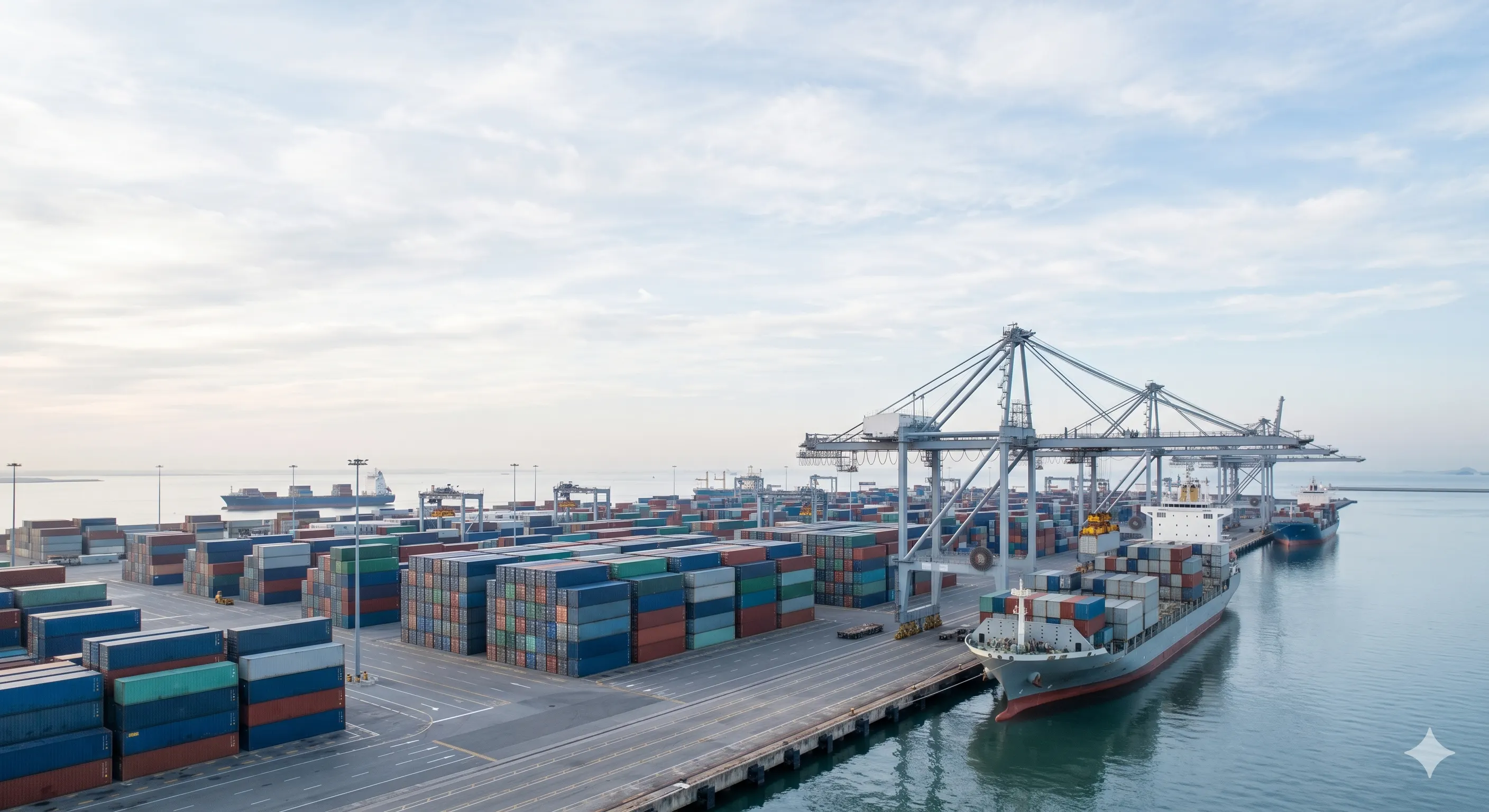
You run the numbers with your supplier in China, the price works, you calculate duty and VAT… and just before clearance you discover that your tariff code carries a 100% countervailing duty on the value. The “good price” just vanished. Countervailing duties are one of the most underestimated costs in foreign trade: they don’t show up on the supplier’s quote, they aren’t the normal duty, and they can multiply what you pay to bring goods into the country. Here’s what they are, how to know if they apply to you, and why anyone importing from China has to check them before buying.
What a countervailing duty is
It’s an additional charge Mexico imposes on the import of certain goods when it determines they entered the country under an unfair international trade practice. Two practices trigger them:
| Practice | What it is |
|---|---|
| Price discrimination (dumping) | The product is sold to Mexico below its “normal value” in the country of origin |
| Subsidies | The product received government support in the origin country that distorts its price |
It isn’t an arbitrary penalty: the duty aims to level the playing field against an artificially low price that harms domestic industry. But for the importer the effect is direct: an added cost stacked on top of everything else.
Who imposes them and where they’re published
In Mexico they’re investigated and determined by the Ministry of Economy (Secretaría de Economía), through the International Trade Practices Unit (UPCI), after an investigation that can run over a year. The result — the duty, its amount, and which goods and origins it applies to — is published in the Official Gazette (DOF). Once in force, customs collects it at clearance like any other contribution.
How they apply (and why they’re so expensive)
A countervailing duty is tied to a combination of tariff code + product description + country of origin — and sometimes + a specific producer or exporter. It can be expressed in two ways:
- Ad valorem: a percentage on the customs value (anywhere from a few points to hundreds of percent).
- Specific: a fixed amount per unit (per kilo, per pair, per piece).
Unlike the normal duty, which rarely exceeds double digits, an antidumping duty can be 80%, 100%, 200% or more. That’s why it turns a profitable operation into a loss when it shows up by surprise.
Why it hits China sourcing so hard
Mexico maintains numerous countervailing duties in force against goods originating in China — steel and its manufactures, aluminum, chemicals, textiles and apparel, footwear, tools, ceramics, among many others. If your sourcing strategy is to buy in China on price, there’s a real chance your product falls under a code with a duty. Not checking it before buying is the most expensive mistake a first-time importer makes with Asian sourcing.
How to know if your goods carry a duty
You don’t guess it: you verify it. The right analysis cross-references three data points:
- The correct tariff classification of your goods (not the one that “sounds right”).
- The real country of origin of the goods.
- The specific description of the product, because many resolutions apply only to certain types within a code.
With that, you check whether there’s a Ministry of Economy resolution in force covering that combination. A wrong classification can hide a duty — leaving you exposed — or, the other way around, make you think one applies when your product is outside the resolution’s scope.
Watch out for “transshipment” to evade
Artificially changing the origin of the goods — shipping them via a third country so they “don’t look Chinese” — to dodge the duty is circumvention, and it’s illegal. Rules of origin for countervailing duties exist precisely to catch it, and the authority investigates circumvention practices. The duty’s added cost is bad; a tax assessment for circumvention, with its fines, is worse.
What happens if you skip it
| Situation | Consequence |
|---|---|
| Not paying a duty in force that applied | Tax assessment for the omitted duty, surcharges and inflation adjustment |
| Misclassifying to avoid the duty | Differences + fines; presumption of irregularity |
| Circumvention via origin change | Aggravated sanctions, possible PAMA and seizure |
| Discovering it after buying | The operation stops being profitable; cargo held if you can’t cover it |
The most common SME mistake
Quoting and closing the purchase with the supplier without verifying the code and its duty. The importer calculates landed cost with duty and VAT, but not with the countervailing duty — because they didn’t even know it existed. They discover it when the goods are already in transit or, worse, at the facility, and then face two bad options: pay a duty that erases their margin, or leave the cargo held, racking up demurrage and storage. The duty isn’t negotiated at clearance: it’s checked before buying.
How it fits with the rest of the clearance
The countervailing duty doesn’t live alone:
- It depends entirely on the tariff classification and the origin — classifying correctly is what reveals (or rules out) the duty.
- It’s calculated on the customs value when it’s ad valorem, so a poorly built value also distorts the duty.
- And it’s settled at customs clearance, along with the rest of the contributions.
At TradeWay
The time to discover a countervailing duty is before closing the purchase, not when the container is already at port. Because we handle the full operation — forwarding, clearance and consulting under a single point of contact — we can:
- Verify your code and its origin to find out whether a duty is in force before you buy.
- Calculate the real landed cost including duty, VAT and the countervailing duty, so your cost figure is the true one.
- Evaluate legal alternatives — another origin, another supplier, a different product configuration — without crossing into circumvention.
If you buy in China or any origin with a risk of unfair trade practices, get in touch today and we’ll review your code before your next order.