Mexico’s Customs Law reform was published in the Diario Oficial de la Federación on November 19, 2025 and took effect on January 1, 2026. Almost all the commentary came from one angle: what it changes for the customs broker.
That is the wrong angle for an importer. When the law tightens on the intermediary, the intermediary tightens on the client — and that is already happening. If over the past months your broker started asking for documents they never asked for before, rejecting data without support, or holding shipments until the paperwork exists, that isn’t a change in attitude. That’s the new law running.
Here is what changed, translated into what falls on you.
1. “The importer gave me that data” no longer works
The core change is in the liability regime. Previously, a customs broker could be excluded from liability when an inaccuracy came from false information provided by the importer, provided the broker could not have detected it. That exclusion was eliminated.
The practical effect isn’t legal, it’s operational: your broker can no longer afford to simply key in whatever you send. They now have to verify it, because they answer for it. That is where the new questions about classification, value, origin and goods description come from.
What did not change: you remain primarily responsible for the accuracy of the data. The reform did not shift responsibility onto the broker. It added the broker’s to yours.
2. The file now has to prove the transaction happened
The reform reinforces the electronic file backing each operation. The invoice and the customs entry are no longer enough: the support must establish real economic substance — that there was a sale, that it was paid, that the goods physically moved, and that the parties exist.
Concretely, every operation’s file should be able to show:
- The tax invoice and how it matches the entry
- Evidence of payment: transfers, bank statements, not just the invoice
- Contract or purchase order, where the commercial relationship has one
- Transport documents that tie down the physical movement
- Customs value support and the method used to determine it — see value declaration
This is the exact counterpart of an audit criterion that had already been growing: the authority doesn’t dispute that the document exists, it disputes that the transaction exists. Undervaluation is caught that way — by cross-checking data, not by reading a file.
3. Warehouses and bonded facilities: real-time control
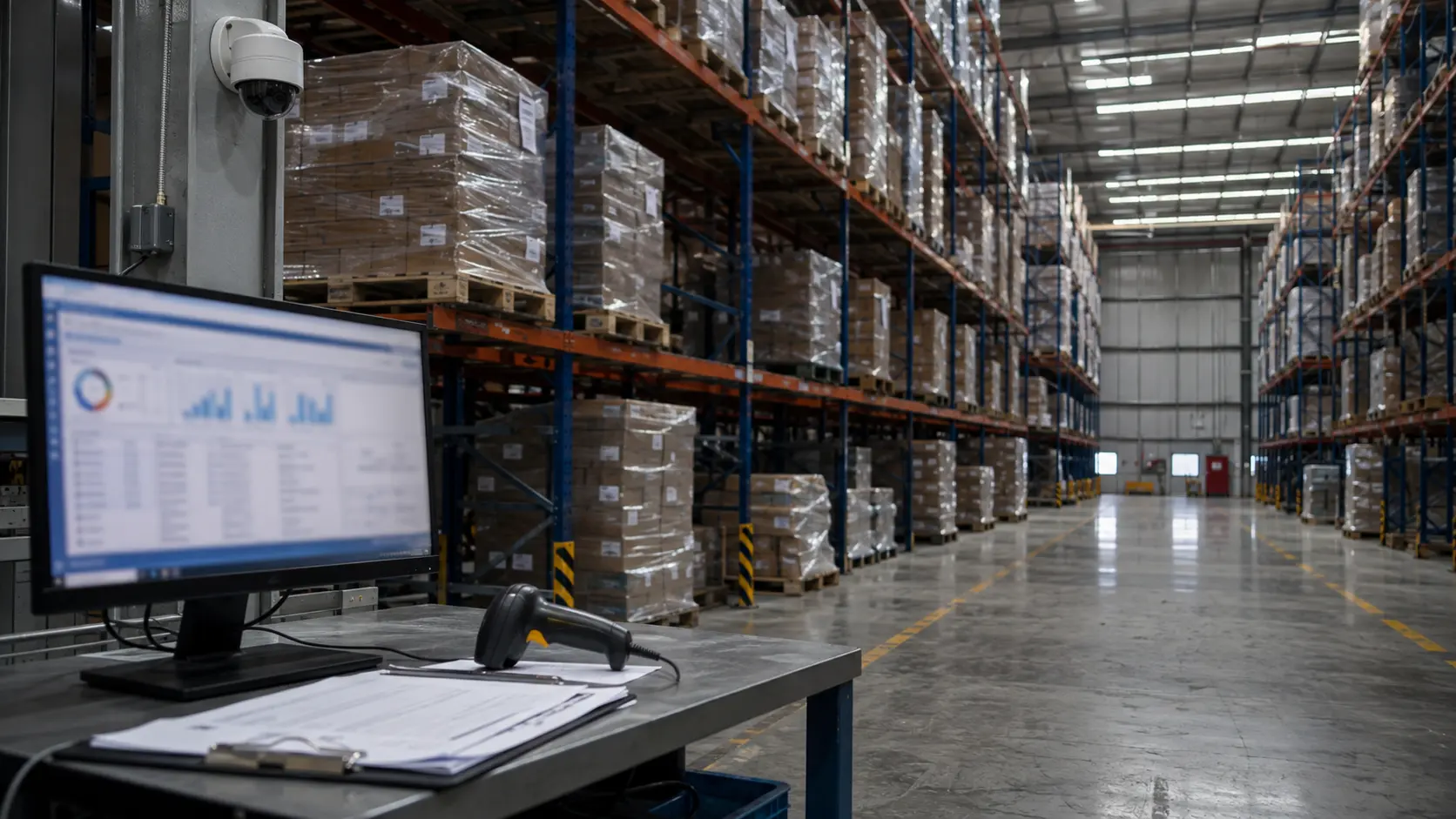
Bonded facilities, warehouses operating fiscal deposit and installations under special regimes are now required to integrate technologically with the authority: inventory control, video surveillance, security, traceability and real-time monitoring, with continuous authority access.
For an importer this is not somebody else’s infrastructure detail. It is a supplier selection criterion:
- A warehouse without that integration is a compliance bottleneck, however low its rate.
- Whatever the facility’s system reports about your goods is what the authority will see. If your internal control doesn’t match the facility’s, the difference is yours.
- If you run IMMEX, your Annex 24 has to reconcile against a third party that now reports in real time.
4. Fiscal deposit: the clock got shorter
Another change with direct cash impact: goods destined for fiscal deposit must arrive at the warehouse within the prescribed window — on the order of twenty days after clearance — or the operation is treated as a permanent import, with the duties that implies.
Translation: a delayed inland move stopped being a scheduling problem and became a tax problem. If your scheme relies on fiscal deposit to defer taxes, the leg to the warehouse is no longer a secondary segment of the chain — it is the one that can turn your deferral into a payment.
The exact deadlines and their conditions live in the law and in the current General Foreign Trade Rules; check the applicable text before building the scheme, because this is the kind of figure that gets adjusted.
5. Guarantees stay locked longer
The treatment of guarantee accounts got stricter: cancellation now extends until audit powers conclude or a final determination is issued.
If your operation uses a guarantee for estimated prices or to defer VAT on temporary imports, the capital committed to that instrument is released later than before. That’s a cash-flow variable, and it belongs in your model before the bank reminds you of it.
6. Choosing a broker is now a long-term decision
The customs broker license moved from indefinite validity to a fixed term — on the order of twenty years, extendable — and the broker must recertify periodically, every three years. Brokers were also given the obligation to report certain irregularities detected in their clients’ operations to the authority.
Three practical consequences for you:
- Ask about the validity and certification status of the license and of the brokerage authorization you operate under. That information is legitimate and verifiable.
- Assume what you hand over can be reported. It isn’t hostility; it’s a legal obligation on your supplier. The right response is to have nothing worth reporting.
- Clearance costs will reflect more verification. A broker who asks you nothing today probably isn’t doing the checking the law requires — and that risk eventually lands in your operation.
7. Penalties went up
Administrative penalties were broadly increased, with scenarios that can reach percentages well above the value of the goods in cases such as improper temporary imports or false supplier information, plus greater severity for classification and valuation errors and facility breaches.
Memorizing figures isn’t useful — they get adjusted. What is useful is understanding the asymmetry. Under the new scheme, the “saving” from a poorly supported operation is a tiny fraction of the possible penalty, and PAMA proceedings stop being the worst case and become the middle case.
What to review this week
No project, no consultancy, no budget. Five checks you can run with what you already have:
- Take three recent entries and assemble the complete file for each as if it were requested today. Whatever you can’t find is your real gap.
- Verify your payments are traceable back to the supplier invoice. Cash payments, payments through third parties, or anything without a bank trail are the most expensive exposure under the new criterion.
- Ask your warehouse or bonded facility for evidence of its technological integration and of the traceability scheme it uses to report your goods.
- Review the transit times of your fiscal-deposit moves over the past months. If any came close to the limit, that wasn’t luck — it’s a process with no slack.
- Confirm the validity and certification of your broker’s license and authorization, and that your broker authorization is current and limited to whoever it should be.
What the reform actually rewards
Read in full, the reform points at one thing: operations where the paperwork, the data and the physical movement agree. Anyone whose chain is split across a forwarder, a broker, a warehouse and a carrier that don’t talk to each other now pays for that fragmentation in time, in immobilized guarantees and in penalty exposure — because nobody has the whole operation in view.
At TradeWay
We run customs clearance, transport and bonded warehousing as a single service, with one point of contact and one invoice — the data, the file and the physical movement are assembled in the same place. If you want a review of your import file against the current scheme, contact us.