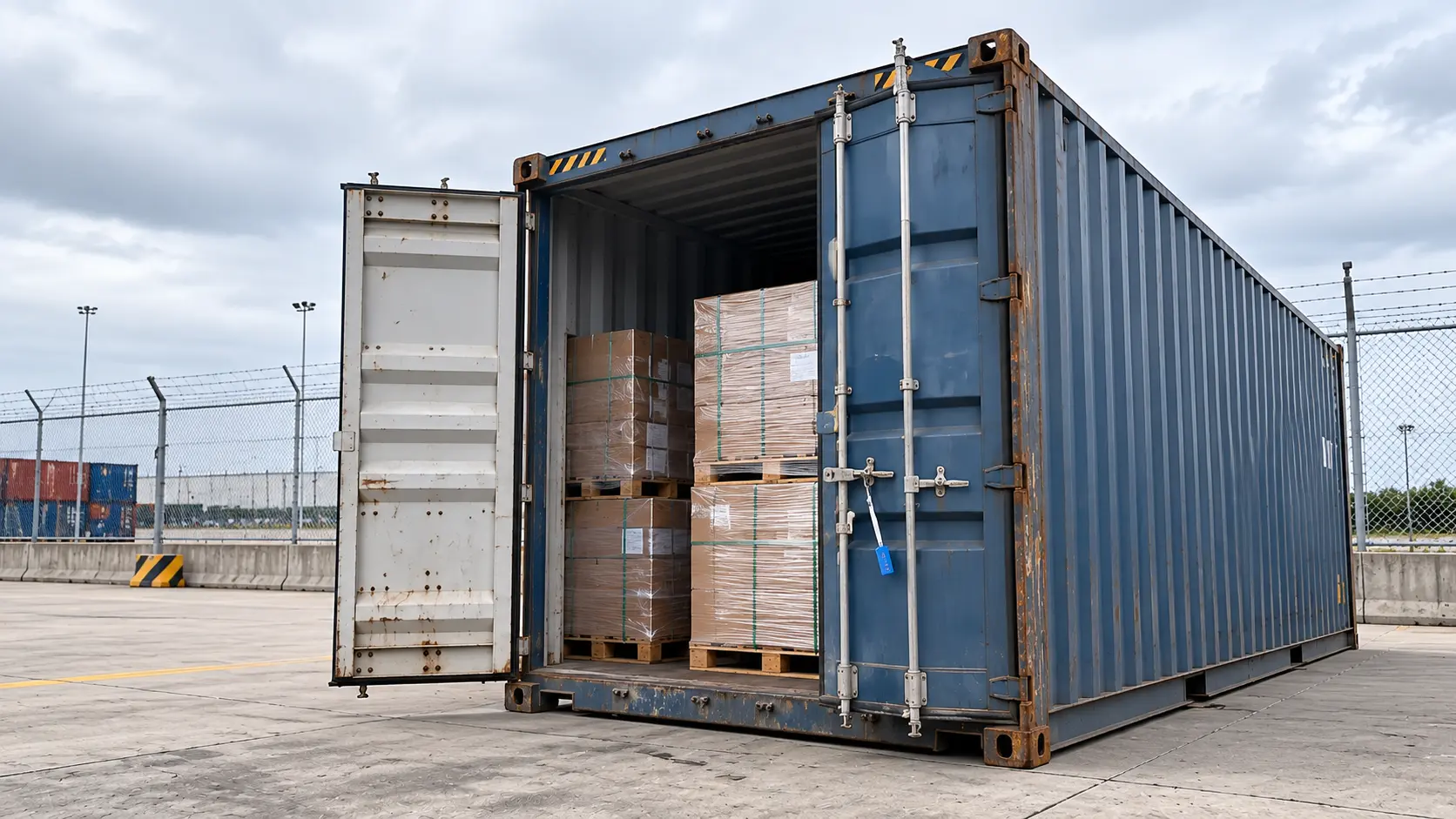
There is a scenario almost nobody prices into an import quote: the goods arrive, go into inspection, and do not come out. When the customs authority detects an irregularity during clearance or inspection, it can seize the goods precautionarily and open a Procedimiento Administrativo en Materia Aduanera (PAMA) — the administrative customs procedure.
From that moment the cargo leaves your operational control, and the problem becomes legal, documentary and financial at the same time.
What a PAMA is
It is the administrative procedure through which the authority records facts or omissions detected in customs matters, holds the goods as a precautionary measure, and gives the interested party the opportunity to submit evidence and arguments before a resolution is issued.
Its start is documented in a formal record that must describe the facts detected, the goods involved and the legal basis for the action. That record is the most important document in the file: what it states defines what you have to defend against.
Why it usually starts
The most frequent causes are not exotic. They show up in ordinary, poorly documented operations:
- Value discrepancies. A declared value that does not match the documentary evidence of the transaction, or a file too thin to support it. This is the territory of undervaluation and SAT enforcement.
- Incorrect tariff classification. A tariff classification that changes the applicable duty or triggers a non-tariff regulation that was not met.
- Missing non-tariff regulations. Prior permits, automatic notices, certificates or NOM labeling compliance.
- Irregular or incomplete documentation. Invoices, certificates of origin or transport documents that do not support what was declared.
- Differences between what was declared and what was found. Quantity, description, brand or model different from the entry.
- Undeclared or excess goods inside the container.
Nearly all of them share one origin: information assembled late, after the goods shipped.
What runs in parallel while it is resolved
The procedure has its own timeline. The cost does not wait. While the file moves along:
- Storage keeps accruing at the facility holding the goods.
- Detention may keep running on a container that is not returned to the line. Both concepts are covered in demurrage, detention and storage.
- The goods do not sell and the invested capital stays frozen.
- Future operations are exposed: a documented irregularity can affect your importer record and lead to an importer registry suspension.
Those four lines together usually exceed the amount of the difference that triggered the procedure. That is why the useful question is rarely “how large is the penalty” but “what does each week of immobilized cargo cost”.
What to do if it has already started
- Get the complete record and read it. Date, facts, identified goods, legal basis and the deadline granted. Everything else is built on that.
- Track the deadline from day one. The right to submit evidence and arguments exists within a set period; losing it through administrative neglect is the worst possible outcome.
- Assemble the real file: commercial invoice, contract or purchase order, proof of international payment, packing list, transport document, certificates, permits and correspondence with the supplier.
- Involve the customs agency and legal counsel from the start. The technical customs work and the procedural work run together, not in sequence.
- Document the daily cost. Storage, detention and commercial impact are part of deciding how far to litigate.
- Do not improvise corrections without confirming their procedural effect.
How it is prevented
Practically every avoidable PAMA is avoided before the cargo leaves origin:
- Classify before loading, not in the yard, and validate which regulations that classification triggers.
- Build the value file from the purchase: a consistent invoice, traceable payment, clear delivery terms under the Incoterms.
- Verify labeling and certificates at origin, while fixing them is still cheap.
- Check that the description and quantity on the entry match exactly what was shipped.
- Keep one complete, findable file per operation instead of splitting it across three providers.
None of these measures is expensive. All of them are far cheaper than a held container.
At TradeWay
We review classification, non-tariff regulations and the value file before goods ship, and we coordinate clearance, transport and warehousing from a single point of contact so information does not get lost between providers. If you have cargo on hold or want to close the gaps before the next shipment, contact us.