If you import metal, the question that defines your operation this year isn’t where it ships from. It’s where it was melted.
Through 2026 Mexico tightened control on both fronts: the automatic import notice for steel products changed its requirements, and a new one was created for aluminum products that is already mandatory to declare on the entry. Both point at the same stated objective: stopping metal from being transshipped toward the United States and Canada using Mexico as an intermediate step.
For an honest importer, the effect is concrete: the certificate your supplier used to send you may no longer work.
The new notice: aluminum
A dedicated rule was added for aluminum products, covering a group of tariff lines under heading 76.01 and onward: unwrought aluminum, bars, profiles, wire, plates, sheets, strip, tubes, fittings and cast or forged pieces.
The sequence was the usual one in these cases: the agreement was published, then the filing was enabled in VUCEM, and a few days later it became mandatory to declare on the import entry. Anyone who didn’t have it stopped.
The notice captures tariff line, quantity, value, type of goods and — this is the new part — the country or countries of smelting and casting.
What tightened on steel
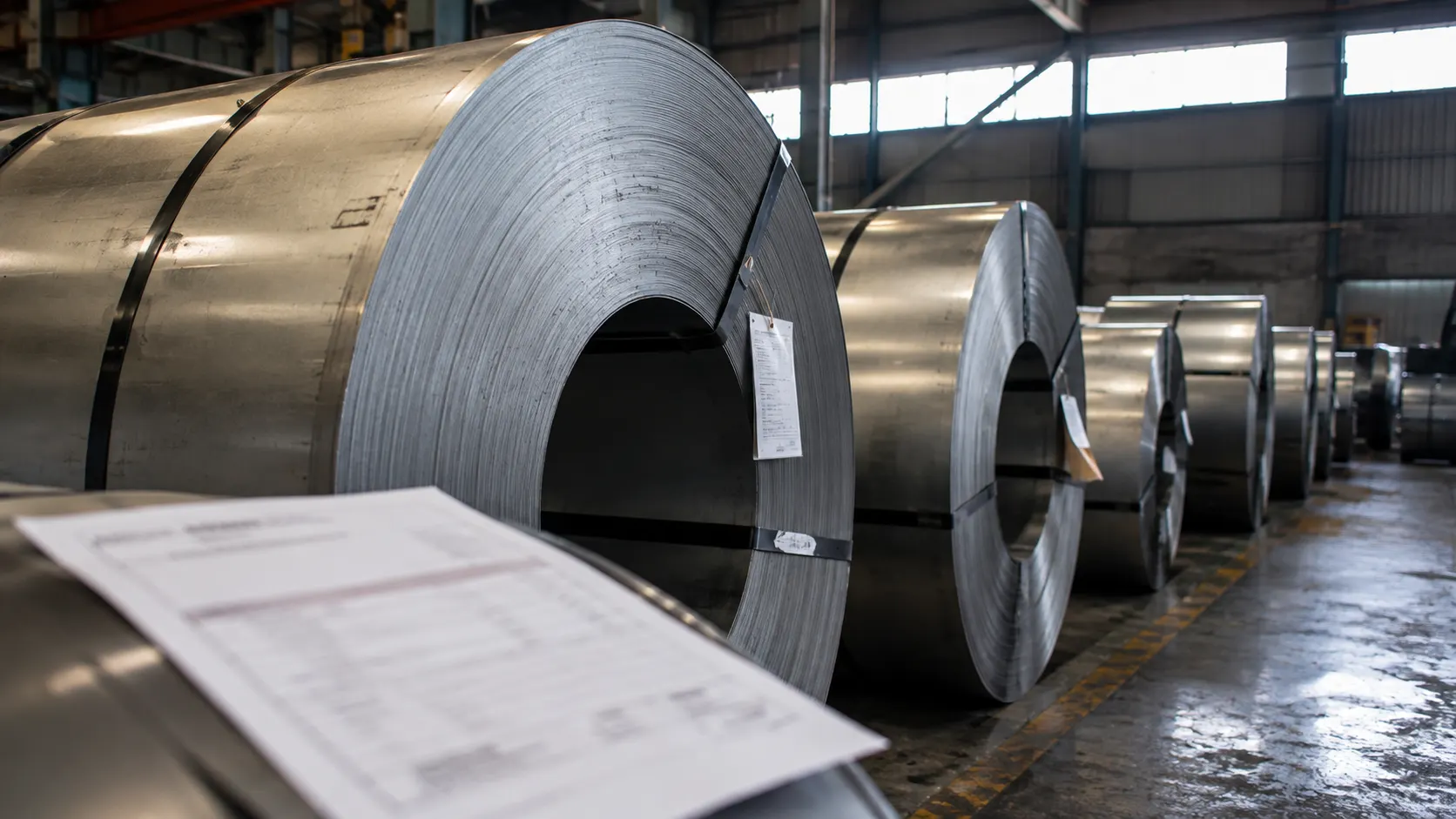
The automatic import notice for steel products (AAIPS) has been running for years. What changed in 2026 is the demand placed on the document behind it, the mill or quality certificate:
- Verifiable QR code.
- Wet signature.
- An explicit split between country of melt and country of transformation.
That third point is what breaks files that had been clearing without incident for years.
Melt and transformation are not the same thing
Here’s the heart of it, and it’s worth saying slowly.
- The country of melt and pour is where the metal was first melted and cast into its initial form.
- The country of transformation is where that metal was rolled, extruded, cut, coated or turned into the product you’re buying.
They can be different countries, and very often are. Steel melted in one country, rolled in another, shipped from a third. Each link is legitimate on its own; what the authority wants to see is the full chain.
Which is why a certificate that only states where the material was processed no longer suffices. The question being answered is the first link in the chain, not the last.
It’s the same logic as USMCA rules of origin and antidumping duties: the real origin of the input, not the last port of departure.
How it’s filed
The notice is handled through VUCEM. Two things to understand before planning:
It’s filed broken out, not in bulk. For steel, one application per tariff line, per country of origin, per unit price and per certificate. A mixed shipment isn’t one notice: it’s several. Anyone quoting timelines on the assumption of a single filing is off by weeks.
There’s a registry route. Enrolling in the sector’s importer registry lets you obtain the notice with a longer validity per tariff line, instead of repeating the short filing every time. For anyone importing metal regularly, that’s the difference between an occasional errand and a permanent one.
Resolution times, validity periods and the list of covered tariff lines get adjusted with every amendment to the agreement. Verify the current text before shipping: this is literally the data point that changed twice this year.
What to demand from your supplier, and when
The answer to when is always the same: before the goods leave. A certificate that arrives with the vessel already sailing doesn’t get corrected, it gets endured.
Ask your supplier, in writing and as a condition of the purchase order:
- Mill or quality certificate for the material, not for the shipment.
- Country of melt and pour stated explicitly, separate from the country of transformation.
- Chemical composition, coating, finish and form — the technical description that supports the tariff classification.
- Heat number, quantities and volumes in kilograms.
- Certificate number and issue date, with a wet signature or the verifiable QR code.
- A plain translation if the certificate isn’t in Spanish.
If the supplier can’t provide it, that’s valuable information in itself. A serious mill has those data points; an intermediary who doesn’t know where the material was melted is exactly the scenario the measure is designed to catch.
The mistakes showing up now
- Quoting freight before checking whether the tariff line carries a notice. The cost and lead time of the filing don’t appear in the transport quote, and they appear later.
- One notice for a shipment with several tariff lines or origins. It doesn’t work. Those are separate filings.
- A trading company’s certificate instead of the mill’s. It describes the shipment, not the metal. Useless here.
- Discovering it at clearance. Without the notice declared, the entry doesn’t move, and the cargo racks up demurrage and storage while a document that should have been requested at origin gets sorted out.
- Assuming that because it didn’t apply last year, it doesn’t apply now. The list of covered tariff lines grew in 2026. That assumption is the most expensive one on this list.
What this means underneath
Mexico is building metal traceability because its trading partners are demanding it. The direction isn’t going to reverse: it’s the same pattern of more information, earlier and more verifiable running through every piece of this year’s customs rulemaking.
The practical read for a metal importer is simple: supplier selection now includes documentary capability. A mill that delivers complete certificates is worth more than one offering two cents less per kilo that can’t say where the metal was melted.
At TradeWay
We check the tariff line and its non-tariff regulations before quoting the shipment, not after, and we handle the notice alongside clearance and transport: one point of contact and one invoice, without you chasing three vendors over a single container. If you move steel or aluminum and want to know what applies to you today, get in touch.