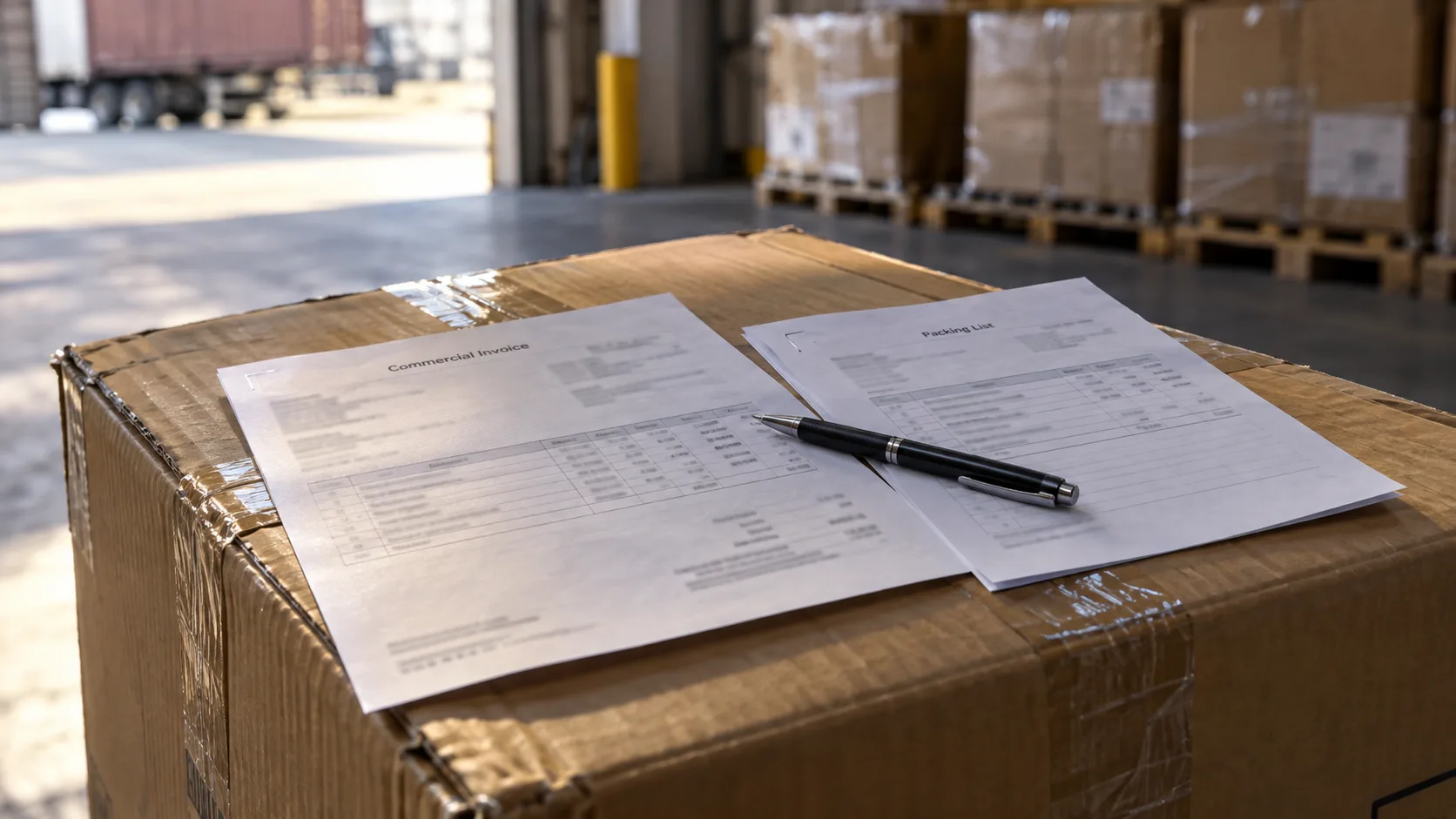
When you export or import, the commercial invoice almost always carries three letters next to the price: FOB Shanghai, DDP Mexico City, EXW Stuttgart. Those three letters are an Incoterm, and they are the one thing that defines who pays for what, who books which transport, and who takes the hit if the cargo gets soaked at sea.
A lot of people sign contracts without understanding the Incoterm they accepted and end up paying twice. Here is the no-nonsense guide.
What an Incoterm is
Incoterms are rules standardized by the International Chamber of Commerce (ICC). The current version is Incoterms 2020. They are 11 three-letter terms that define, in any international sale, three things:
- How far does the seller pay for transport?
- At what exact moment does the cargo stop being the seller’s problem (risk transfer)?
- Who handles export and import procedures?
They do not define ownership or method of payment — that is governed by your contract and payment instrument (letter of credit, wire transfer, etc.).
The 11 Incoterms 2020 — grouped by who carries the most
Seller does almost nothing — maximum work for the buyer
| Incoterm | Meaning | Who carries the main cost |
|---|---|---|
| EXW | Ex Works | The buyer. The seller just leaves the goods ready at their factory. |
When to use it: the buyer has their own logistics or a strong forwarder at origin. Risky for new importers because you have to handle even export clearance in a country you don’t know.
Seller delivers to main carrier — buyer takes the freight
| Incoterm | Meaning |
|---|---|
| FCA | Free Carrier — seller hands over to the carrier at agreed location |
| FAS | Free Alongside Ship — sea only, seller delivers alongside the vessel |
| FOB | Free On Board — sea only, seller delivers loaded onboard |
FOB is the classic for imports from Asia. The Chinese supplier delivers loaded onboard in Shanghai, and from there you (or your forwarder) handle the full ocean freight, arrival at Manzanillo, Mexican clearance and final delivery.
Seller pays the main freight — risk transfers before cost does
| Incoterm | Meaning |
|---|---|
| CPT | Carriage Paid To — seller pays freight to destination, but risk passes to buyer at origin |
| CIP | Carriage and Insurance Paid — same as CPT but seller also pays insurance |
| CFR | Cost and Freight — sea only, seller pays freight to destination port |
| CIF | Cost, Insurance and Freight — sea only, like CFR but with insurance |
The dangerous detail: in CIF/CFR, risk transfers when the cargo crosses the ship’s rail at origin. If the container falls overboard mid-Pacific, the insurance is paid by the seller, but the loss is taken by the buyer. Sounds odd, but it has worked this way for decades.
Seller delivers at destination — full service
| Incoterm | Meaning |
|---|---|
| DAP | Delivered at Place — seller delivers ready for unloading at the agreed place |
| DPU | Delivered at Place Unloaded — seller delivers already unloaded |
| DDP | Delivered Duty Paid — seller delivers with everything paid, including destination customs |
DDP is the most convenient for the buyer: the foreign supplier delivers at your warehouse already nationalized, with duties paid. But it is the most expensive and there is almost always a hidden margin in logistics. It only makes sense when the supplier has local operation in Mexico (rare).
The 4 most expensive traps we see
1. Confusing risk transfer with cost transfer
They are different. Under CIF you pay the freight (cost), but you take the risk from origin. If damaged cargo arrives under CIF, you file the insurance claim — not the supplier.
2. Accepting EXW as a new importer
With EXW you are responsible for export clearance in the supplier’s country. If you don’t have an agent in Shanghai, Hamburg or Houston, you can be stuck for weeks. Always ask for FCA at minimum.
3. Accepting DDP without realizing the seller picks the broker
Under DDP the foreign seller hires the Mexican customs broker. If they pick a cheap one and misclassify a tariff code, you eat the SAT fine, not the seller. SAT doesn’t bill China — it bills you, the importer of record.
4. Mixing Incoterms with payment method
A letter of credit protects you on payment, not on freight. If you sign FOB but the cargo is damaged at sea, the letter of credit still obligates you to pay the bank even if you receive scrap. That’s why FOB should always come with your own cargo insurance.
How to choose the right Incoterm
Three guiding questions:
- Do I have reliable logistics at origin? If not → don’t accept EXW or FOB without advice.
- Do I have a trusted customs broker at destination? If yes → take DAP or CPT and clear customs yourself. If not → DDP, knowing you pay a margin.
- Who has cheaper cargo insurance? Compare: sometimes the seller has better rates (CIF), sometimes your forwarder has corporate rates (CIP or FOB + own insurance).
General recommendation by operation type
| Cargo type | Recommended Incoterm |
|---|---|
| Ocean import from Asia, importer with forwarder | FOB |
| Ground import US → Mexico, known route | FCA |
| Urgent import, first time with a supplier | CPT or CIP |
| Export to end client who doesn’t know how to import | DAP (not DDP — avoid paying destination customs) |
| Small sample purchase (DHL, FedEx) | The courier almost always handles DDP and that’s fine |
At TradeWay
When we quote an operation, the first thing we ask is: what Incoterm is the supplier selling to you under? Because it 100% changes the scope of the service you need. If you have a purchase in negotiation and don’t know which Incoterm to ask for, talk to a specialist — in under 24 business hours we’ll tell you which one fits and how much it saves you.