
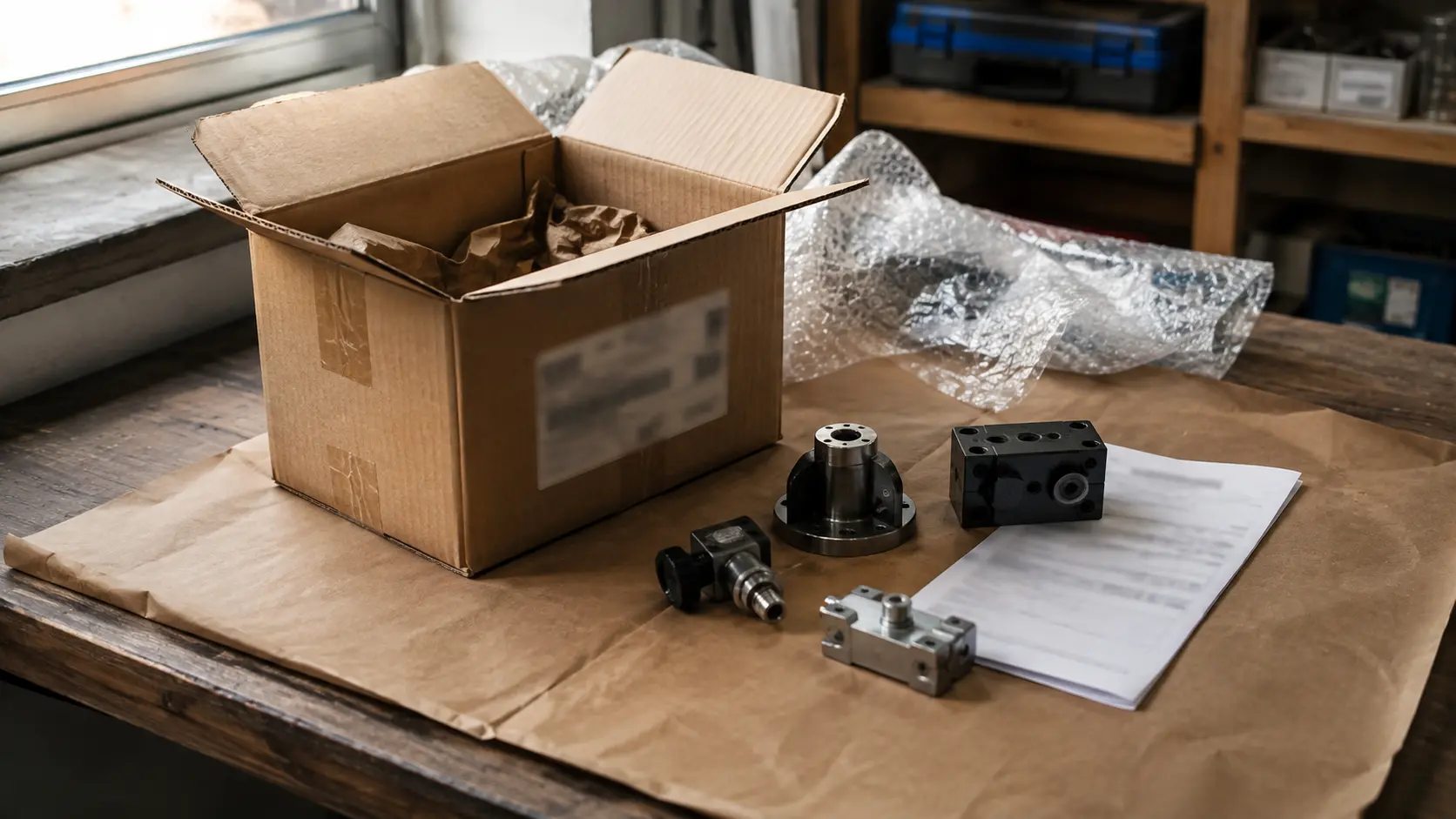
Your supplier in Asia sends three pieces so you can validate quality before the big order. The invoice reads “samples — no commercial value” with a value of zero, or a symbolic dollar. It sounds reasonable: you aren’t going to sell them, no money changed hands.
And that’s exactly where the trouble starts. “No commercial value” is a commercial description, not a customs category. It doesn’t exempt you from declaring, from duties and taxes, or from the entry.
Every good that enters has a customs value
This is the underlying point. Customs value isn’t “what you paid”: it is the base on which duties and taxes are determined, and customs needs one for any goods brought into the country. If there was no payment — because the supplier gave them to you — that doesn’t mean the value is zero. It means the transaction value method doesn’t apply and the value has to be reached another way.
That’s where the shipment falls apart. An invoice showing zero gives the authority nothing to work with, and one showing “1 USD” for three pieces that clearly cost more is worse: it’s a declaration that fails the first question. This is squarely the territory of undervaluation, even when the intent was only to simplify a formality.
The right move is to declare a reasonable, supportable value: what that piece would cost if purchased, backed by a price list, a quote, or the unit value of the order you’re evaluating.
What can actually be treated as a sample
Mexican customs law does contemplate treatment for samples and sample collections, but it’s narrower than most people assume. The core idea is that they be goods intended solely to demonstrate the characteristics of merchandise and that they cannot be commercialized.
That second part is the one that gets ignored. In many cases the preferential treatment requires the sample to be rendered unusable — marked, perforated, cut, torn or permanently altered — precisely so it can’t be sold. A functional piece in its original packaging rarely qualifies, no matter what the invoice says.
Before assuming your shipment fits, check the criterion currently in force for your goods: it’s a point that gets updated and where the specific detail decides.
What is almost never a sample
- Finished, functional product you’ll use, display or hand to a customer.
- Spare parts or replacements, even when the supplier sends them free of charge.
- Inventory in quantity: three pieces can be a sample; three hundred are an import.
- Promotional material with value of its own — demo equipment, complete kits.
- Goods the supplier throws in “as a courtesy” as part of a purchase. That’s a discount, not a sample.
That last case is especially frequent and deserves care: if your supplier includes extra pieces free of charge inside a commercial shipment, those pieces get declared. Goods found that don’t appear on the entry are among the scenarios that lead to PAMA and precautionary seizure.
The courier shortcut, and why it breaks
The natural route for a sample is an international courier. It’s fast and the operator handles clearance. It works well within its scope, but it has a limit worth knowing before you depend on it:
The courier’s simplified regime carries value caps and restrictions by type of goods. When a shipment exceeds them, or when the goods require a non-tariff regulation, the operation no longer fits that scheme and must be cleared through ordinary channels — with a pedimento, a customs broker authorization, and where applicable, importer registry enrollment.
The typical result: the package arrives, stops, and the importer discovers they need a formal clearance they never planned for. By then storage charges are already running.
And there’s an additional point that gets underestimated: samples are not exempt from non-tariff regulations. If your product requires a prior permit, an automatic notice or NOM labeling compliance, that requirement doesn’t vanish because there are only three pieces. Some standards do provide for samples and prototypes, but those provisions have to be verified, not assumed.
How to order a sample properly
One email to your supplier before they ship prevents nearly all of the above:
- Proforma invoice with a reasonable value, not zero or symbolic. It should reflect what the pieces are actually worth.
- Precise description of what it is, what it’s for, and what it’s made of. “Sample” is not a description.
- A defensible minimum quantity. Ask for what you need to evaluate, not a case.
- Confirm whether they must be rendered unusable under the treatment you intend to claim.
- Validate the tariff classification before shipping: it’s what determines which regulations get triggered.
- Ask about the shipping mode and confirm the shipment fits within it.
When the sample is urgent
If the project can’t wait and the shipment doesn’t fit in a courier, there’s the hand carrier option: the goods travel accompanied on a commercial flight and clear formally on arrival. It costs more per kilo, but when what’s stalled is validation of a production line, the comparison isn’t against freight — it’s against the cost of the line standing still.
At TradeWay
We handle samples like any other operation: classification validated before shipping, a supportable value, and the transport mode that actually fits — courier, formal freight or hand carrier — through a single point of contact. If you have a sample on hold or you’re about to request your first one, contact us before your supplier ships it.