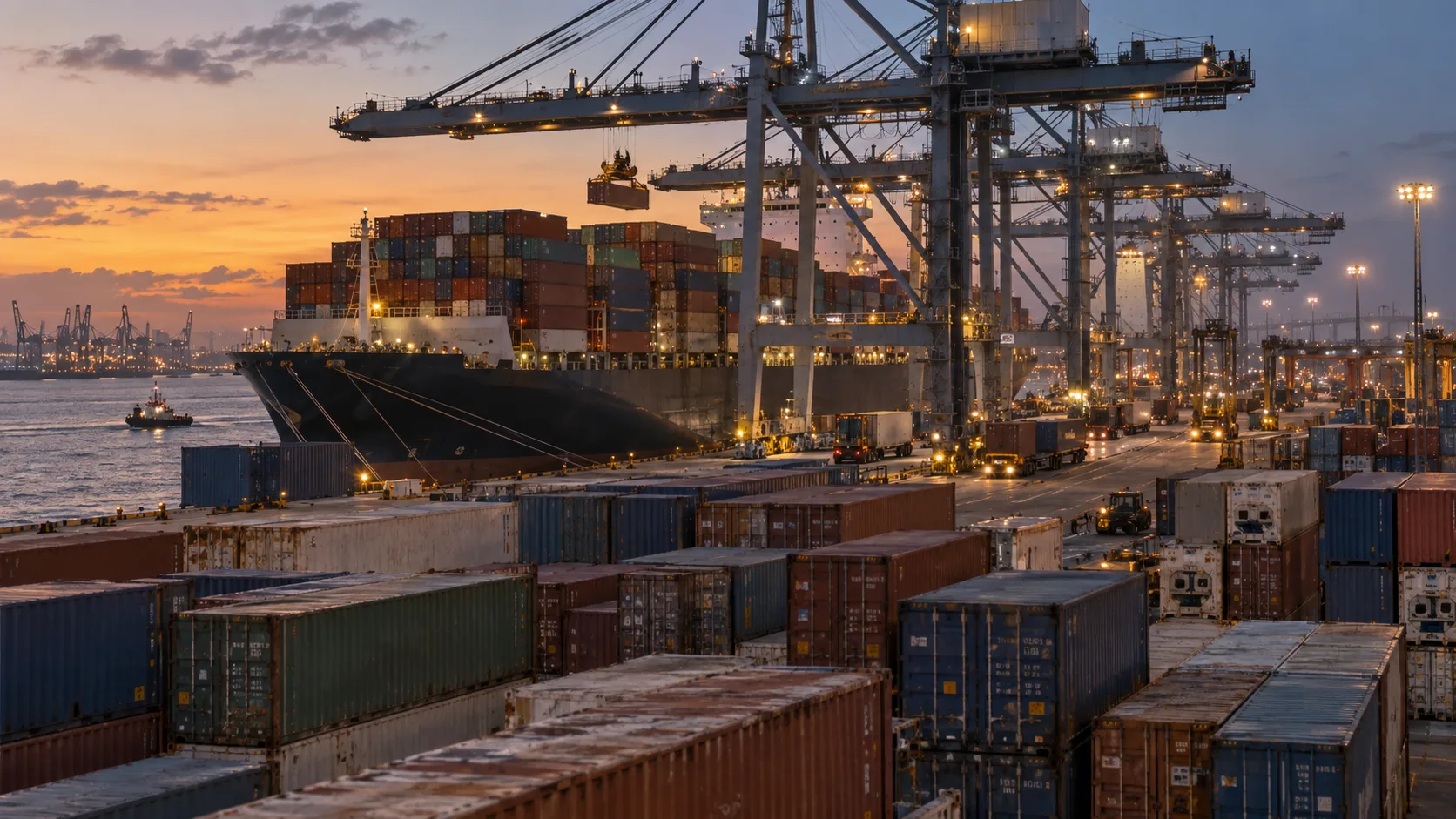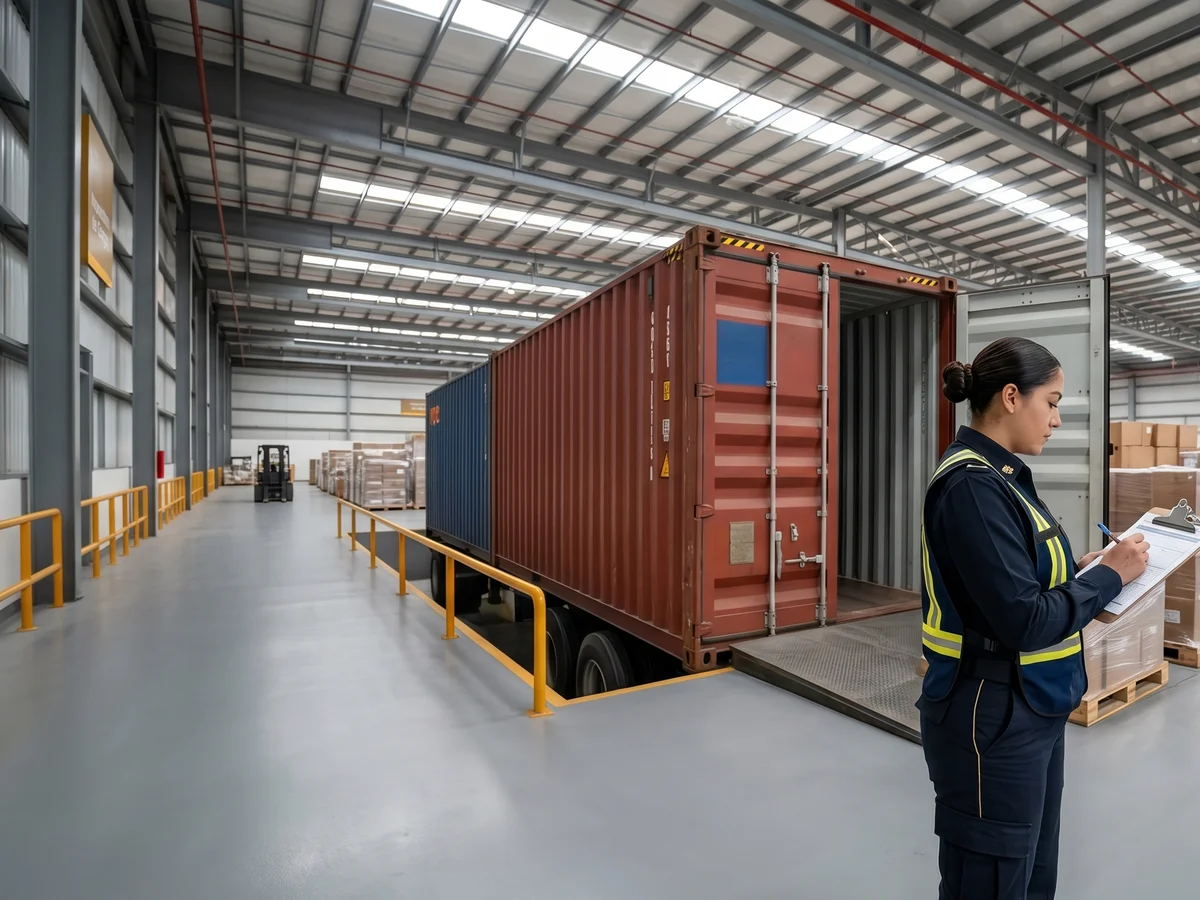
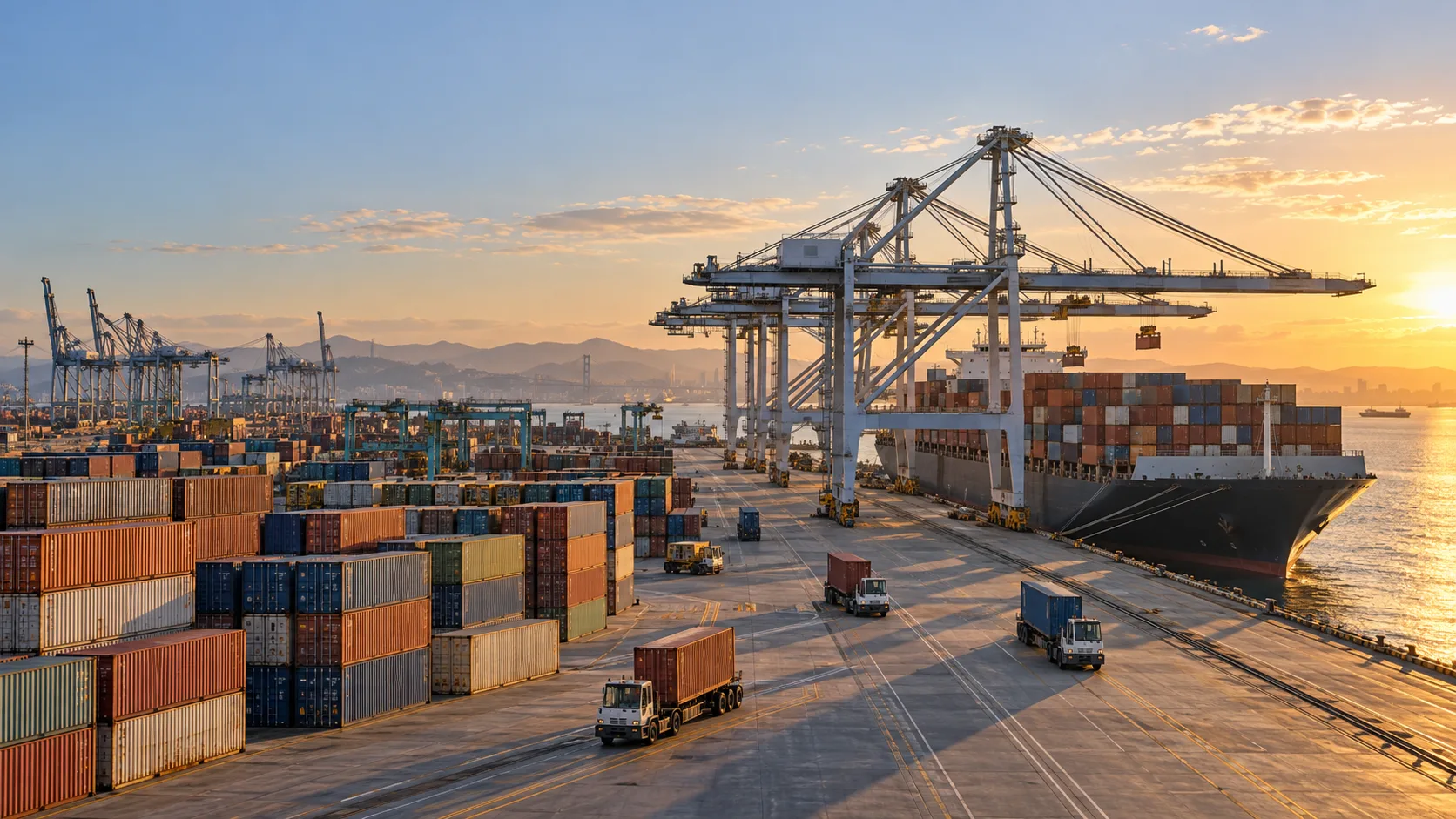
When you quote ocean freight into Mexico, one of the first boxes to fill is the port of discharge. Many people put the one they’ve heard of — usually Manzanillo — and move on.
That box decides how many days your container spends at sea, how many kilometers it covers afterwards by road or rail, how likely it is to sit waiting during peak season and, for some goods, whether it can even be cleared there. Choosing the port is a cost and time decision, not paperwork.
The map in one sentence
Mexico has ports on both coasts, but the bulk of its containers go through four: Manzanillo and Lázaro Cárdenas on the Pacific, Veracruz and Altamira on the Gulf. According to the port statistics published by Mexico’s Navy (SEMAR), Manzanillo handles the most containers, followed by Lázaro Cárdenas, Veracruz and Altamira; Ensenada, in Baja California, rounds out the top five.
The geography is straightforward: cargo from Asia comes in on the Pacific; cargo from Europe and the US East Coast comes in on the Gulf. The exceptions come from where the cargo is headed inside the country.
Manzanillo (Colima)
The country’s largest container port and the natural gateway for cargo from Asia.
- Typical origin: China, Korea, Japan, Taiwan, Southeast Asia.
- Serves best: Guadalajara, the Bajío and central Mexico, by road and rail.
- Strengths: the widest choice of carriers and direct services from Asia. If your supplier is near a major Chinese port, there’s almost certainly a service to Manzanillo.
- Watch out for: precisely because of its volume, it’s the first to congest when peak season arrives. Berthing delays, full yards and slow gate appointments turn into days and into demurrage and storage charges. Road access also gets heavy at peaks.
Transit times from the main Asian ports are in transit times Asia–Mexico.
Lázaro Cárdenas (Michoacán)
Mexico’s second container port, also on the Pacific, and the direct alternative to Manzanillo for Asian cargo.
- Typical origin: Asia, like Manzanillo.
- Serves best: central Mexico and the Bajío, and a rail corridor that runs up to the northern border.
- Strengths: a deep-water port with a strong rail connection. A large share of its containers leave by train, which makes it attractive when the final destination is far from the port or the container continues on to the United States.
- Watch out for: fewer carrier services than Manzanillo. Before choosing it, confirm your carrier calls there as often as you need, and that the rail leg has capacity on your date.
Veracruz
The Gulf’s most important container port and the country’s oldest, expanded in recent years.
- Typical origin: Europe, the US East and Gulf coasts, South America’s Atlantic side.
- Serves best: Mexico City, Puebla, central and southeastern Mexico.
- Strengths: proximity to central Mexico and regular services to Europe. For European cargo bound for the Mexico City area, it’s usually the shortest land leg.
- Watch out for: the nortes, winter cold fronts that can close the port to shipping for hours or days. In December and January, build slack into the plan.
Altamira (Tamaulipas)
An industrial Gulf port, with a strong petrochemical and manufacturing presence around it.
- Typical origin: Europe and the United States via the Gulf.
- Serves best: the northeast — Monterrey and its region — San Luis Potosí and the northern Bajío.
- Strengths: it’s the container port closest to San Luis Potosí and a good gateway for northeastern industry.
- Watch out for: few direct routes from Asia. Being the port closest to your plant doesn’t automatically make it the best: if your supplier is in China, the Pacific route usually wins on days even with a longer land leg.
Quick comparison
| Port | Coast | Typical origin | Serves best | Watch out for |
|---|---|---|---|---|
| Manzanillo | Pacific | Asia | West, Bajío, central Mexico | Peak-season congestion |
| Lázaro Cárdenas | Pacific | Asia | Central Mexico and Bajío by rail; corridor north | Your carrier’s frequency and rail capacity |
| Veracruz | Gulf | Europe, US East Coast | Mexico City, Puebla, southeast | Winter nortes |
| Altamira | Gulf | Europe, US Gulf | Northeast, San Luis Potosí, northern Bajío | Few direct routes from Asia |
How to choose the port for your shipment
Distance on the map is only one criterion. The ones that weigh most:
1. Where your supplier is. That sets the coast. Asian cargo can also reach the Gulf through the Panama Canal, with more days at sea; it only makes sense when the final destination is much closer to the Gulf or the Pacific is congested.
2. Where the goods end up. The real cost is door to door: ocean freight plus the land leg. A port with cheaper ocean freight can turn expensive if your container then travels 900 kilometers by truck. That total is what matters in your landed cost.
3. Truck or rail. For steady volumes and destinations far from the port, rail can lower the cost per container. For urgent loads or nearby destinations, trucking gives more control.
4. The season. In peak months, the busiest port is the one that congests most. Planning the alternative before the season hits is cheaper than reacting once the wait has started. The calendar is in peak season for importers.
5. The type of goods. Some goods can only be cleared at specific customs offices. If yours fall under that scheme and the container lands at the wrong port, no paperwork fixes it. Check designated customs offices for sensitive goods before you close the purchase.
6. Get it in writing. The port of discharge goes on the bill of lading and the freight quote. Changing it with the vessel at sea costs money, when it’s possible at all.
Where Mexico’s imports come in
Ports are only part of the picture. The country’s main gateways:
- The northern border, by road and rail. Most trade with the United States, Mexico’s largest trading partner, crosses here. Nuevo Laredo is the busiest customs office in the country by trade. The crossings are compared in US–Mexico border crossings.
- Seaports. The four in this article handle nearly all containers; other ports matter for bulk, vehicles or energy.
- Airports. Air cargo concentrates in the Mexico City metropolitan area and in Guadalajara, Monterrey and Querétaro. It’s the route for urgent and high-value-per-kilo goods; for a part that can’t even wait for a cargo flight, there’s the hand carrier.
If you need figures — containers per port, entries per customs office — check SEMAR’s port statistics and the information published by Mexico’s National Customs Agency (ANAM). They change every month, and an article with fixed numbers goes stale fast.
At TradeWay
We work with licensed customs brokers in Manzanillo, Lázaro Cárdenas, Veracruz, Nuevo Laredo and Mexico City airport, with offices in San Luis Potosí, halfway between both coasts and the northern border, and a warehouse in Laredo, Texas. When we quote, we lay the possible routes side by side — port, land leg, time and cost — so you choose on numbers, not habit. One point of contact, one invoice. Request a quote.