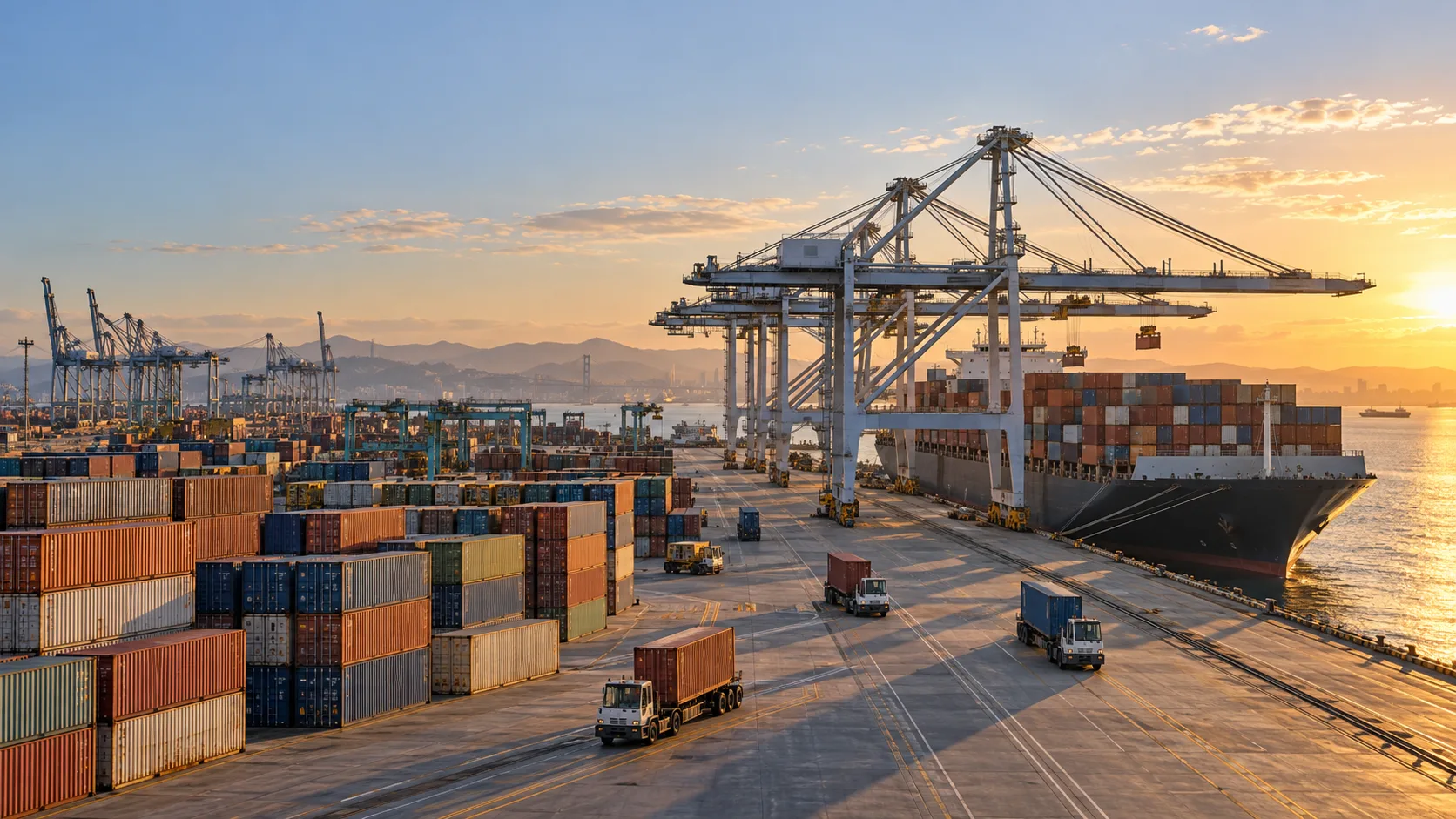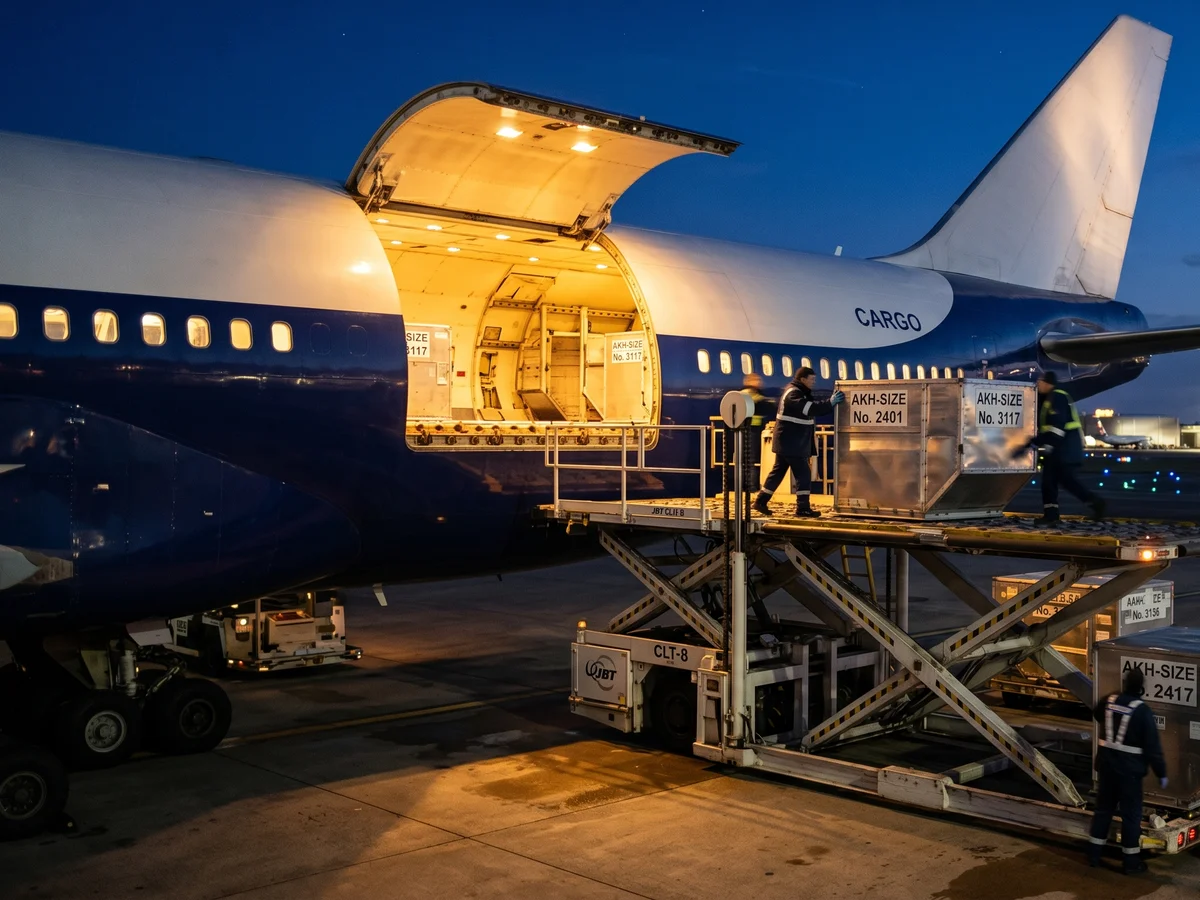
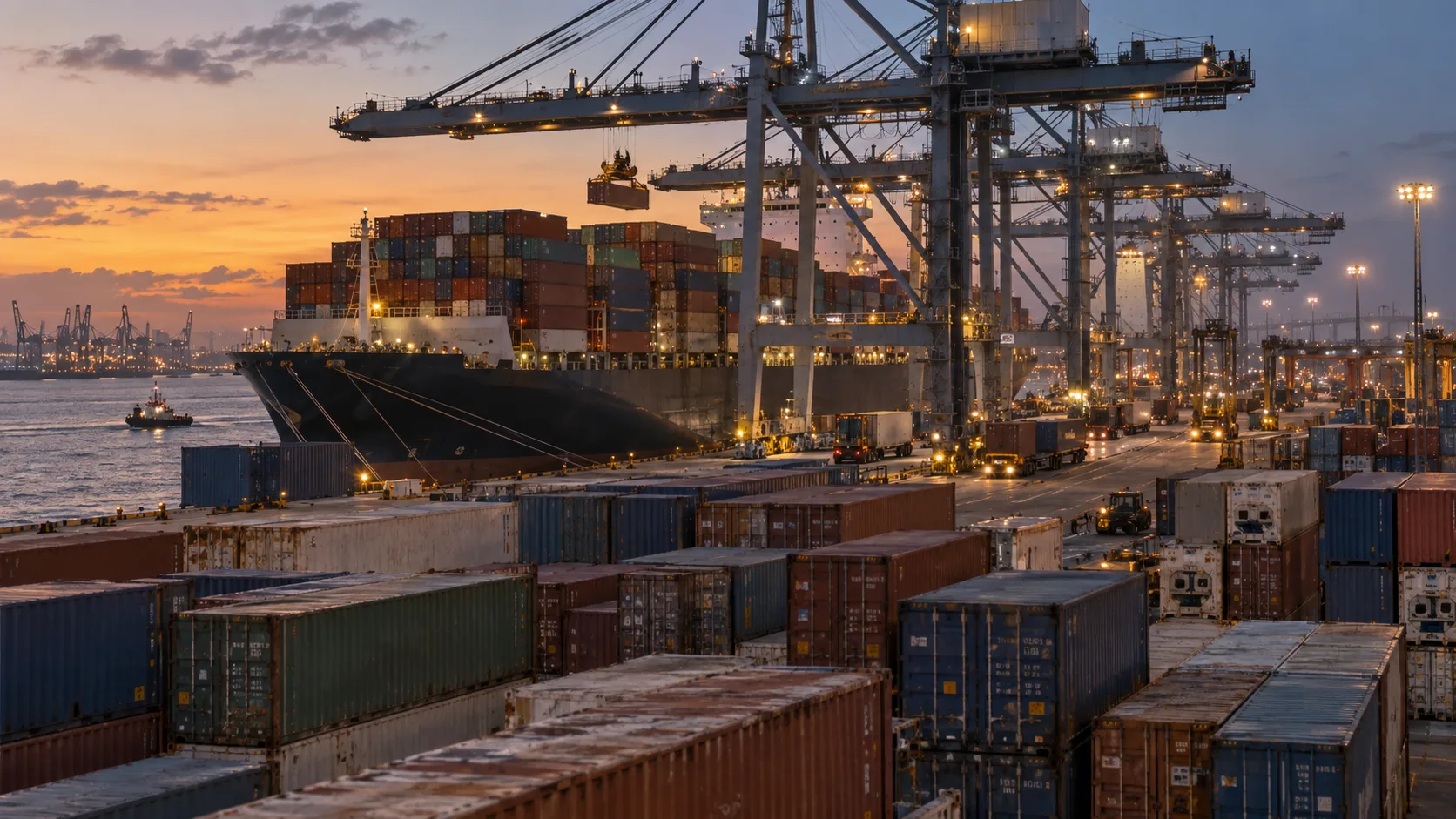
International freight doesn’t cost the same all year, and neither does time. There are weeks when booking space is routine and weeks when the same container, on the same route, costs more, takes longer and sits on the quay because it didn’t fit on the vessel.
The difference between an importer who suffers peak season and one who gets through it without noticing is almost never the rate they negotiated. It’s when they moved.
At the end of September this matters in particular: it’s when it gets decided whether year-end goods arrive on time.
Two calendars that overlap
Importing runs two clocks at once, and almost nobody looks at them together:
- The logistics calendar: when there’s space on vessels, when factories close at origin, when the port saturates.
- The Mexican calendar: when your customer buys, when the rules change, when operations slow at customs, bonded facilities and trucking.
The problem shows up when the peaks of both fall in the same weeks. And they do.
The logistics calendar, month by month
August to October: the transpacific peak
This is when Asia ships year-end goods for all of North America. Demand rises, carriers apply peak season surcharges and general rate increases, and space tightens.
Typical symptom: the booking is confirmed, but the container doesn’t make the scheduled vessel and rolls to the next one. A week’s delay without anyone having done anything wrong.
Golden Week: October 1 to 7
A national holiday in China. Offices and factories close for roughly a week, and with them production and much of the trucking to port.
The effect is twofold: the weeks before saturate because everyone wants to ship ahead of the shutdown, and the weeks after start with a backlog. An order that didn’t leave the factory before October 1 usually leaves well after the 7th.
November and December: the last window
Whatever sells during Mexico’s Buen Fin — November 13 to 17 this year — and in December has to be in Mexico beforehand, cleared and on the shelf. Given transit times from Asia plus clearance, goods that didn’t leave origin by late September or early October enter the season with a real risk of not arriving.
December and January: the race before Chinese New Year
Chinese New Year 2027 falls on February 6. Around that date factories close for two to four weeks, and the workforce returns gradually. Many plants take a while to get back to normal output.
That’s why December and January feel like a second peak season: everyone wants to produce and ship before the shutdown. Orders placed late in January are often produced in March.
February and March: the hangover
After Chinese New Year demand drops and capacity is in surplus for a while. Carriers sometimes cancel sailings to adjust supply. It’s a cheaper season, but not necessarily a more predictable one.
Chinese calendar dates move every year because they follow the lunar calendar. Confirm them with your supplier when planning.
The Mexican calendar
On top of all that, year-end in Mexico concentrates changes:
- October 1: the Electronic Value Declaration becomes mandatory. The first weeks of any change like this run slower.
- October and November: Congress debates next year’s fiscal package. This year it includes a customs reform initiative on undervaluation.
- Public holidays in November and December: customs operates, but brokers, bonded facilities, carriers and service providers run with reduced staff. Storage charges don’t stop.
- Late December: next year’s General Foreign Trade Rules are published.
- January 1: tariff schedule changes and updated fees usually take effect. Goods arriving on January 2 can pay differently from goods that arrived on December 30.
- June to November: hurricane season. Temporary port closures on both the Pacific and the Gulf are part of the calendar, not a surprise.
What gets more expensive in peak season
Not just freight. In peak season almost everything rises at once:
- Ocean freight, through surcharges and rate increases.
- The risk of the shipment rolling to the next vessel, which translates into days.
- Inland trucking from the port, because units are scarce.
- Port and bonded-facility congestion, which slows everything else.
- Demurrage and storage: if something stops in December, each day costs the same but resolves more slowly. See demurrage, detention and storage.
That’s why the landed cost of the same product can vary widely depending on the month it moved.
Simple planning rules
- Book earlier in peak season. Several weeks more lead time than usual. Space found late is found expensive.
- Check your freight quote’s validity. In peak season many quotes carry “subject to GRI”. Ask what happens if the increase lands before the sailing.
- Classify and obtain permits before buying. A permit, NOM standard or sector-specific registry missing in December resolves more slowly than in March, and the goods wait in the bonded facility. The duty calculator shows what the tariff flags for your line.
- Consolidate before Chinese New Year. If you’ll need goods in February and March, the order goes in November, not January. Assess whether FCL or LCL suits the accumulated volume.
- Hold buffer stock for the period when origin is closed.
- Review the Incoterms on your peak-season orders. Whoever books the freight is whoever fights for the space. See Incoterms.
- Have the full file ready before shipment. A request answered in hours doesn’t hurt; one answered in weeks, in December, does. See what to do if goods are held.
At TradeWay
We plan the shipment with both calendars in view — space at origin and operations in Mexico — and coordinate freight, clearance, trucking and warehousing through one point of contact and one invoice. If you have goods for year-end or for after Chinese New Year, get in touch now: this is the week when there’s still room to choose.