
An import stops for one of two reasons: the goods didn’t arrive, or a document doesn’t match. The second is far more common, and it could almost always have been avoided two weeks earlier, when the supplier sent the invoice and nobody read it carefully.
The file isn’t accumulated bureaucracy. Each document answers a different question, and when one is missing, what collapses is precisely the answer holding up that stage of the clearance.
Why the file carries more weight now
The amendment to Mexico’s Customs Law in force since 1 January 2026 removed provisions that shielded customs brokers from liability for what was declared. Responsibility for the information on the entry is now shared between the importer and whoever files it.
In practice this changes a very common conversation. “My broker handled that” is no longer a defense: if the data came out of your file, it is yours. It is worth reviewing the current text with your advisor, because the detail lives in the transitional provisions, but the direction is clear — the importer owns their information, not just the goods.
The commercial documents
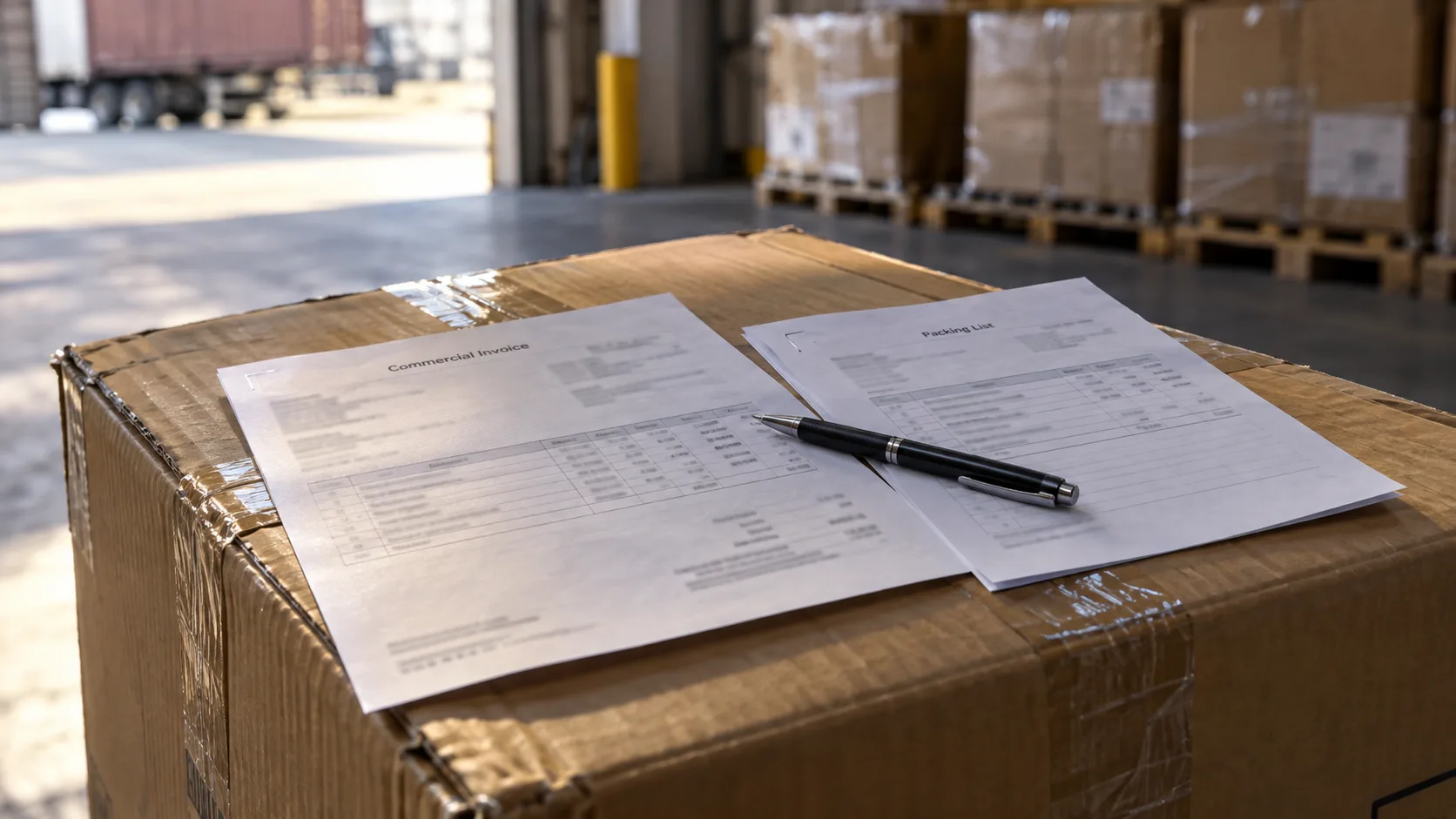
Commercial invoice. It is the basis of the declared value. It has to identify the real seller and buyer, describe the goods in a way that allows classification, and separate the price from the items that get added or subtracted: freight, insurance, commissions, discounts.
The classic error is the “customs invoice” carrying a different value from the invoice actually paid. That isn’t an administrative shortcut: it is a discrepancy between what was declared and what was paid, and it is exactly the pattern that triggers an undervaluation review.
Packing list. It states what is in each package, with weights and dimensions. It looks like the least important document in the file until the day the cargo is physically inspected: there the authority compares package by package against what was declared, and a generic list — “20 boxes, assorted goods” — proves nothing.
The transport document
It changes by mode, and they don’t all work the same way:
- Bill of lading (ocean). In its negotiable form it controls delivery: whoever holds the endorsed original takes the cargo. The customs entry releases the goods before customs, not before the carrier. Those are two separate permissions and you need both.
- Air waybill. Not negotiable. It delivers to the named consignee, and that name has to match whoever will import.
- Carta porte. Covers the domestic road leg and is now a tax requirement in its own right, explained in carta porte 3.1.
The expensive mistake here is consigning the transport document to someone who won’t be the importer. It can be corrected, but it costs time and money, and meanwhile the cargo sits generating storage and demurrage.
The documents that support the value
The authority doesn’t only want to know what you declared: it wants to be able to verify it.
The customs value declaration and its calculation sheet formalize how you arrived at the customs value. Behind them there has to be real backup: contract or purchase order, proof of payment, transfers, and evidence of the additions — freight and insurance with their own documentation.
This block is the most neglected and the one that weighs most when a review arrives, because it gets requested years later, when nobody remembers the shipment.
Origin and regulatory documents
They answer “where does it come from” and “what is required of it”:
- Certification of origin when you intend to claim preferential tariff treatment under a trade agreement. Who can issue it and what invalidates it is in certificate of origin and USMCA rules of origin.
- Prior permits, automatic notices and other non-tariff regulations, depending on the tariff code. Detail in import permits and automatic notices.
- NOM compliance: certificate, statement or whichever scheme applies, with labeling resolved before the goods arrive.
- Sector-specific importer registry when the goods require it — it is a registration, not a per-shipment document, but without it the shipment doesn’t enter. See sector-specific importer registry.
The documents that authorize and close
Customs broker authorization. This is what empowers the broker to clear in your name. Without it there is no operation, and its scope defines how far they can act. Explained in customs broker authorization.
COVE and digitization in VUCEM. Invoices and supporting documents are transmitted electronically and linked to the entry. System detail in VUCEM. Something as simple as an unreadable scan fails here: if the document can’t be read, it may as well not exist.
Pedimento. It is the output, not an input. It reflects what the file said. How to read it field by field is in how to read a pedimento.
The complete file at a glance
| Document | Who issues it | What it proves | If missing or mismatched |
|---|---|---|---|
| Commercial invoice | Supplier | Value and description | No basis to declare value |
| Packing list | Supplier | Contents package by package | Discrepancy on physical inspection |
| BL / air waybill | Carrier | Contract and right to collect | The goods aren’t released |
| Certification of origin | Exporter or producer | Preferential tariff treatment | General duty rate applies |
| Permits and NOM | Agency or certified body | Non-tariff compliance | Clearance can’t proceed |
| Customs value declaration | Importer | How the value was built | Violation and exposure on review |
| Broker authorization | Importer | The broker’s authority | Clearance can’t be filed |
| Pedimento | Customs broker | The declared operation | — |
The five recurring errors
- Commercial description instead of technical. “Spare parts” can’t be classified. Material, function and model can.
- Additions with no breakdown. If freight is inside the price and never separated, the customs value is built blind.
- Consignee different from the importer. Fixing it costs days.
- Certification of origin signed by someone who can’t, or not covering the actual goods. The preference is lost on review, with differences to pay.
- A scattered file. Invoice in one email, BL in another, permits on someone’s phone. When the request arrives, rebuilding it costs more than assembling it properly would have.
Any of the five can escalate into a customs seizure proceeding if the difference is substantive, or be resolved with an amendment if it is formal. The distance between the two is usually decided by the quality of the backup you can show.
How long to keep it
The general retention period is five years, and for temporary imports it runs while the goods remain in the country. Keeping it means being able to find it: one file per operation, with the entry number as the key, and a digital backup.
That sounds obvious until a request arrives about a shipment from three years ago and the supplier no longer exists.
Checklist before shipping
- Does the invoice description allow classification without guessing?
- Does the invoice value match what you will actually pay?
- Are the additions broken out or identified?
- Is the consignee on the transport document the importer?
- Does the tariff code carry non-tariff regulations, and are they resolved before shipping?
- Does the certification of origin cover exactly the goods traveling?
- Is the broker authorization current?
- Is every document legible once digitized?
At TradeWay
We review the file before the goods leave, not once they’re sitting on the terminal floor, and we coordinate clearance, transport and warehousing through a single point of contact and a single invoice. If you want a document review of your next operation, contact us.