The commercial invoice is the document you control least and the one that commits you most. Your supplier issues it, in another country, in their format. And you answer for it.
It’s the source of the value you declare, the description your goods get classified by, the data on the customs entry and, from October 1, the information feeding Mexico’s Electronic Value Declaration. A badly drafted invoice isn’t a paperwork problem: it’s where half of all entry errors start.
This article has two parts: what the invoice must contain by rule, and what it should contain for your operation to hold up.
When it’s required
The obligation to present an invoice applies when goods have a commercial value above 300 US dollars. Below that there are simplified treatments; above it, the invoice is mandatory.
It’s no longer handed over on paper: its data is transmitted electronically as part of clearance. That changes nothing of substance. The invoice has to exist, be complete and sit in your file, because it’s the first thing you’ll be asked for in any review.
The minimum data the rules require
Mexico’s General Foreign Trade Rules set the minimum content:
- Place and date of issue.
- Invoice number or document identifier.
- Name and address of the supplier or seller.
- Name and address of the consignee of the goods.
- Name and address of the buyer, when different from the consignee.
- Detailed commercial description of the goods: class, number of units, identification numbers where they have them, and unit and total values.
If the description comes in a language other than Spanish, English or French, it has to be translated into Spanish.
It looks like a short list, and it is. The problem is never a missing place or date. It’s item 6.
The detailed commercial description, where everything fails
“Spare parts.” “Electronic components.” “Accessories.” “Samples.” “Plastic products.”
Those descriptions are legal in the sense that they describe something. They’re useless in the sense that the goods can’t be classified from them. And if they can’t be classified precisely, nobody knows what duty they pay, which NOM standard applies or which permit they need.
A detailed commercial description answers, for each line:
- What it is: technical name, not catalogue name.
- What it’s made of: main material and, where it matters, composition.
- What it’s for: function.
- How it comes: presentation, assembled or disassembled, whether it’s a set.
- Brand and model, if any.
- Serial numbers, where the goods carry them.
It’s exactly the information tariff classification needs. If it isn’t on the invoice, somebody will assume it — and the assumption is yours.
What the law doesn’t ask for, but customs needs
An invoice can meet the rule and still leave you unable to defend your value. These data points aren’t on the minimum list, but they make the difference:
The Incoterm and the named place. “FOB Shanghai”, “EXW Shenzhen”, “CIF Manzanillo”. Without it nobody knows what the price includes, and therefore what has to be added to reach customs value. See Incoterms.
Currency. Explicit. A price without a currency is an ambiguity nobody wants to interpret during a review.
Freight, insurance and other charges itemized, if included in the price. Blended into one total, they can’t be separated later.
Discounts, on the invoice. A discount that isn’t on the invoice, as far as customs is concerned, never existed. If you paid less than list price, the invoice has to say so and say why.
Payment terms. Advance, credit, letter of credit. They get cross-checked against proof of payment and must match.
Country of origin per line. Especially if the supplier sells goods of several origins, and always if you plan to claim preferential duty with a certificate of origin.
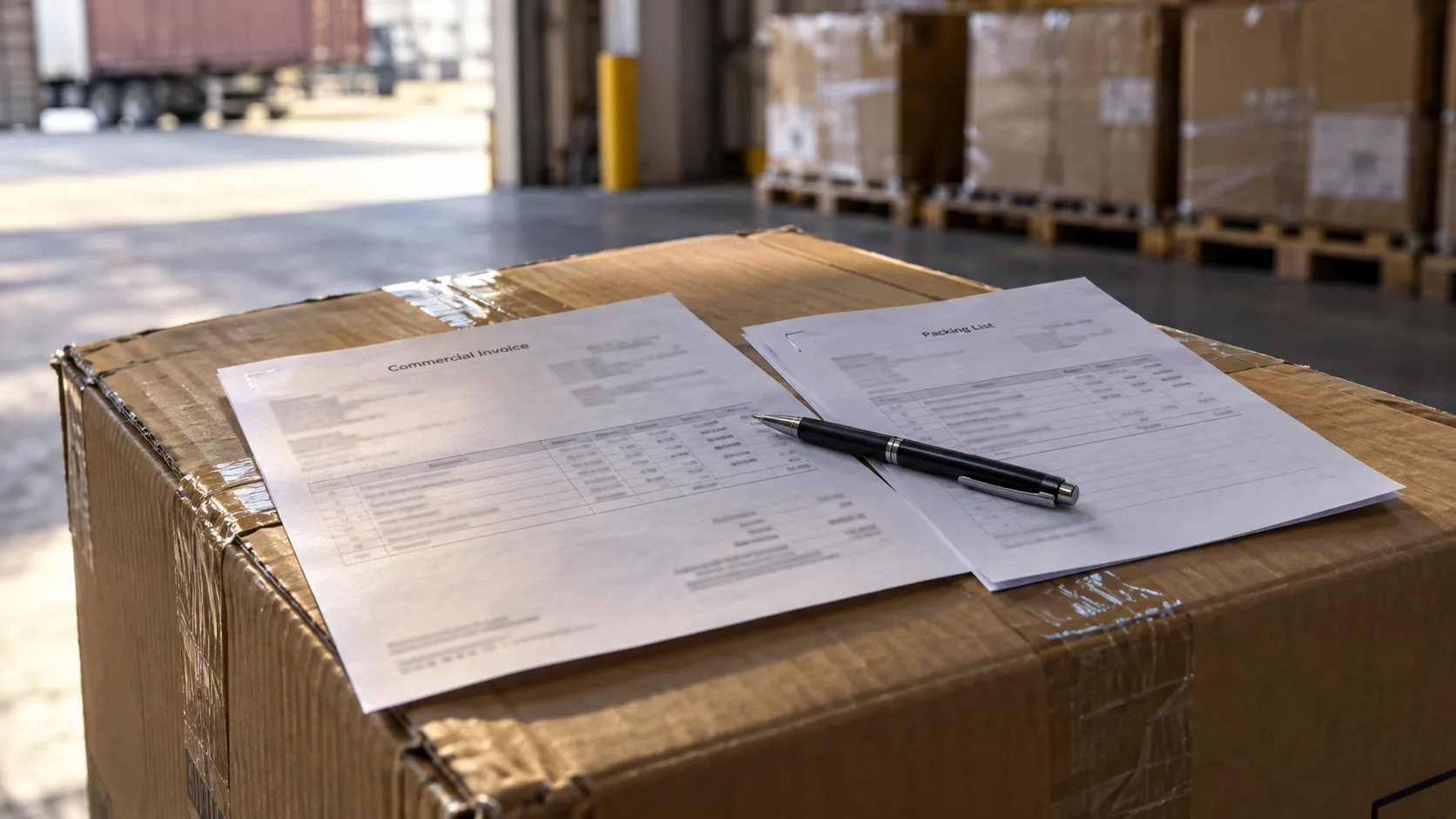
Units consistent with the packing list. If the invoice says “20 cartons” and the packing list says “480 pieces”, somebody has to do the conversion — and in an inspection it shows.
These points carry more weight now: Mexico’s 2027 customs reform initiative proposes seizure on any value gap against identical or similar goods. An invoice that explains its price is your first line of defence.
The mistakes we see most
- Importing on the proforma. A proforma is a quote. Clearance runs on the final commercial invoice, and the two don’t always match.
- Token pricing on samples. “No commercial value” doesn’t mean zero value to customs: samples have their own treatment, and one dollar on goods that obviously cost more is a red flag.
- The company name spelled differently on invoice, CFDI, bill of lading and entry. To a system that cross-checks data, those are two different companies.
- A discount agreed by email that never made it onto the invoice.
- One invoice covering two shipments without identifying which part goes in each.
- A tariff code entered by the supplier and accepted without review. The supplier classifies under their own country’s nomenclature and for their own purpose; classification in Mexico is your responsibility.
If the invoice is wrong
Errors and omissions on the invoice can be cured through a sworn statement by the importer or their customs broker, but that normally carries a fine unless the correction is spontaneous.
The cheapest way to fix an invoice is before the supplier issues it. The second cheapest is before the shipment leaves. After that, everything costs.
The invoice doesn’t travel alone
What customs reviews isn’t the invoice but the consistency of the file:
invoice ↔ packing list ↔ bill of lading ↔ proof of payment ↔ contract ↔ MVE ↔ customs entry
One data point that differs between two of those documents is a question. Several that differ is a review. The full list of what belongs in that file is in documents required to import into Mexico.
A checklist to send your supplier
Most problems are solved with one email before shipment. Copy this and make it a condition of the purchase order:
Commercial invoice requirements — shipments to Mexico
- Place and date of issue, and invoice number.
- Seller’s full legal name and address.
- Consignee’s full legal name and address, exactly as registered — and buyer’s, if different.
- Detailed description of each line item: technical name, material, function, brand, model, and serial numbers where applicable. No generic terms such as “parts” or “accessories”.
- Quantity and unit of measure per line, consistent with the packing list.
- Unit price and total per line, with the currency stated.
- Incoterm and named place (e.g., FOB Ningbo).
- Freight, insurance and any other charges itemized separately if included in the price.
- Any discount shown on the invoice, with its reason.
- Payment terms.
- Country of origin per line item.
- Final commercial invoice — not a proforma — issued before shipment.
At TradeWay
We check the invoice against the packing list, the shipment and proof of payment before the goods leave origin, and ask the supplier for whatever is missing while it can still be fixed without a fine. One point of contact and one invoice for the whole operation. If your supplier’s invoices always raise questions at customs, get in touch.