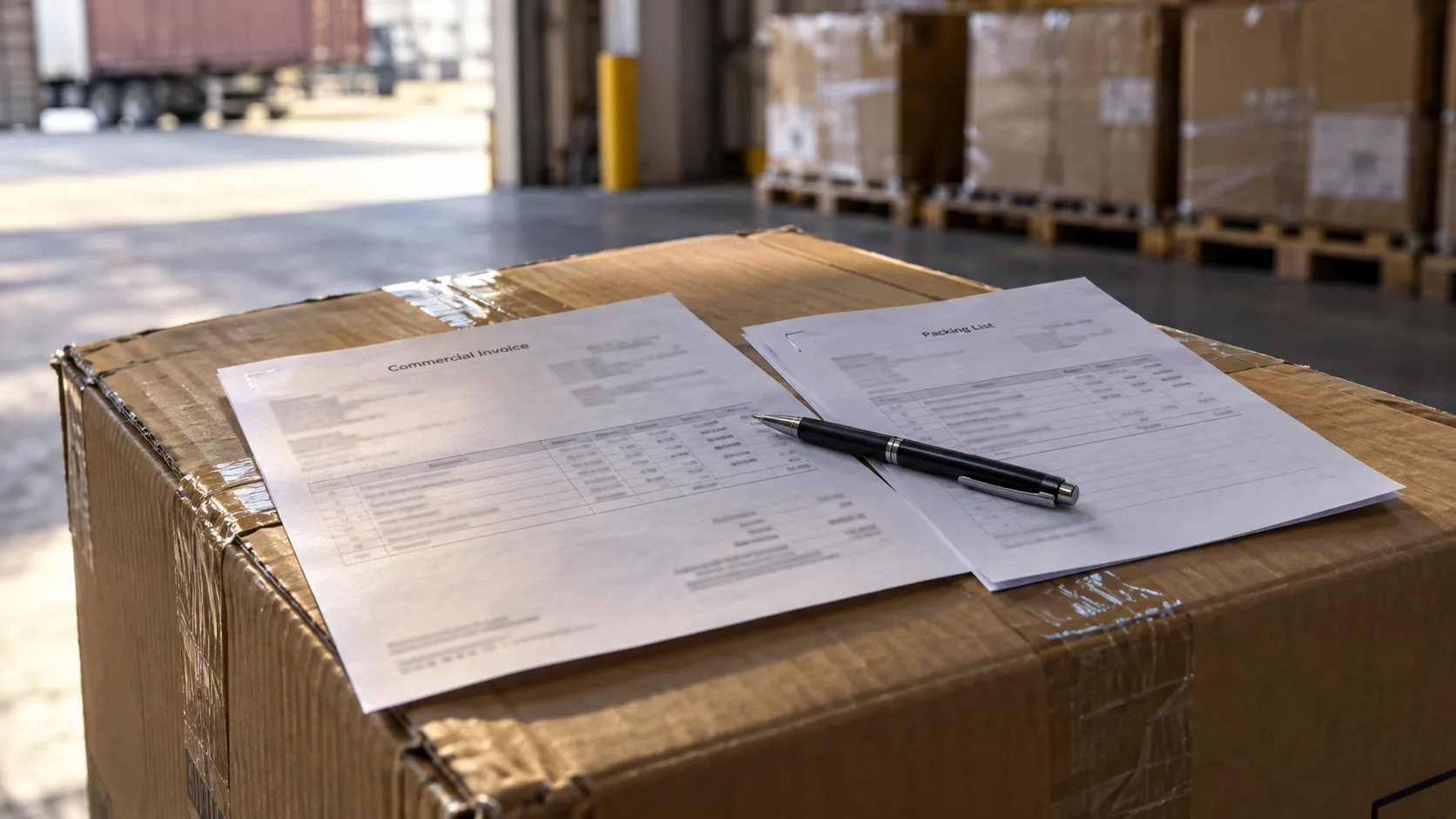

You bought goods for 20,000 dollars. The supplier’s invoice says 20,000. The natural assumption is that duties are paid on 20,000.
But Mexican customs doesn’t tax the invoice. It taxes the customs value, and getting there means adding to the price some costs that almost never appear on that invoice — and taking off others that sometimes do appear and shouldn’t count.
What gets added is known in Mexico as incrementables. What comes off, decrementables. Getting them right is the difference between declaring correctly, underpaying without noticing (and paying the difference later with penalties), or overpaying for years.
First: what customs value is
It’s the base for the general import duty (IGI), the customs processing fee (DTA) when it’s calculated on value, and import VAT. Each one is explained in import taxes in Mexico: IGI, DTA, VAT and prevalidation.
In the vast majority of imports, customs value is set by the transaction value method: the price paid for the goods, adjusted by the additions and deductions in Mexico’s Customs Law (Ley Aduanera). It’s the WTO Valuation Agreement method, and it’s what gets reported in the customs value declaration.
The underlying rule is simple: customs value should reflect what it costs to put the goods at Mexico’s door. Not a peso that happens before arrival and was left out, nor a peso that happens after arrival and slipped in.
Additions: what gets added
They’re listed in Article 65 of the Customs Law. They’re added to the price when the importer bears them and they’re not already included in the price paid.
1. Freight, insurance and transport costs up to Mexico. International freight, the insurance premium and related charges — handling, loading, unloading — until the goods reach Mexican territory. It’s the most common addition and the most often forgotten, because it arrives on the forwarder’s invoice, not the supplier’s.
2. Commissions and brokerage, except buying commissions. If you pay an agent who represents the seller, that commission is added. If you pay your own buying agent to source a supplier, it isn’t.
3. Containers and packing. The cost of containers treated as one with the goods, and packing costs — materials and labor — if you paid them separately.
4. What you supplied to the manufacturer. The least-known one. If you sent the manufacturer — free or at a reduced price — molds, tools, materials, parts built into the product, or designs and drawings made outside Mexico, their value is spread across the goods produced with them and added.
5. Royalties and license fees you must pay as a condition of the sale. If you can’t buy the product without paying for the brand or technology license, that royalty is part of the value.
6. Proceeds that flow back to the seller. Any part of what you earn from reselling or using the goods that returns to the seller, directly or indirectly.
And one condition that protects the importer: only what can be backed by objective, quantifiable data gets added. An addition isn’t estimated; it’s documented.
Deductions: what comes off
They’re in Article 66. They are not part of customs value as long as they’re itemized separately from the price of the goods on the invoice or equivalent document:
- Installation, assembly, maintenance or technical assistance performed after importation. If you bought a machine and the price includes the supplier’s technician installing it at your plant, the installation is not part of the machine’s value.
- Freight, insurance and handling inside Mexico, after the goods have arrived. If you bought with delivery to your warehouse, the domestic leg isn’t part of the value.
- Duties and taxes paid in Mexico on the import or sale of the goods.
- Costs the importer incurs on its own account, even if they benefit the seller — for example, the advertising you pay for to sell the product in Mexico — except those Article 65 requires you to add.
- Payments to the seller not directly related to the goods, such as dividends.
The key word is itemized. If the invoice says “machine, installed, 50,000 dollars” with no breakdown, there’s nothing to subtract from: it all counts as the value of the goods. A deduction that isn’t separated on paper gets taxed.
The Incoterm decides what you add
The Incoterm you agreed on determines which transport legs are already in the price and which ones you pay separately. That’s why two purchases of the same product, from the same supplier, can carry very different additions:
| You bought… | What the price already includes | Transport you add |
|---|---|---|
| EXW | Nothing: you collect at the factory | Everything: origin trucking, export clearance, international freight and insurance to Mexico |
| FCA / FOB | Goods handed to the carrier or loaded on the vessel | International freight and insurance to Mexico |
| CFR | Also freight to the Mexican port | Insurance, if you bought it |
| CIF / CIP | Freight and insurance to destination | No transport (still check the other additions) |
| DAP / DDP in Mexico | Transport to a point inside the country | Nothing; the domestic leg is deductible if itemized |
Two clarifications:
- CIF doesn’t cover everything. It settles freight and insurance, not royalties, molds or commissions. Those are checked separately, whatever the Incoterm.
- DDP has Mexican taxes built in. If the supplier sells you DDP, the price already includes the duties they paid in Mexico. To keep them out of the base, they must be itemized. Otherwise you end up paying tax on tax.
A worked example
A company buys injection-molded plastic parts from a manufacturer in Asia, FOB Ningbo, with this invoice and these costs:
| Item | Amount (USD) | What it is |
|---|---|---|
| Price of the parts | 18,500 | Price paid |
| Start-up supervision at the buyer’s plant in Mexico, itemized on the invoice | 1,500 | Deduction: service after importation |
| Supplier invoice total | 20,000 | |
| Ocean freight Ningbo–Manzanillo | 2,000 | Addition: transport to Mexico |
| Cargo insurance | 100 | Addition |
| Mold the importer had made and handed to the manufacturer: USD 9,000, spread over three equal shipments | 3,000 | Addition: asset supplied to the producer |
| Commission to the manufacturer’s sales agent, paid by the importer | 400 | Addition: not a buying commission |
Customs value = 18,500 + 2,000 + 100 + 3,000 + 400 = USD 24,000.
The invoice said 20,000. The correct base is 24,000. Had only the invoice been declared, the gap wouldn’t be a simple 4,000: the mishandled deduction inflated the base by 1,500, and the missing additions lowered it by 5,500. Two errors pulling in opposite directions that don’t cancel out: each one is a separate finding.
That dollar amount is converted to pesos at the exchange rate that applies to the entry, and duties are calculated on it. To see how much an addition moves the total, run the case through our import duty calculator, which takes freight, insurance and other additions as separate inputs.
Where it’s declared and how it’s supported
Additions and deductions aren’t buried in a single number. The pedimento has its own fields for freight, insurance, packing and other additions, and the full determination is recorded in the electronic customs value declaration.
Support is documentary, and the Customs Law Regulations state plainly that documentation of additions belongs in the file:
- Freight invoice and quote from the forwarder or carrier.
- Cargo insurance policy or certificate.
- License or royalty agreements, if any.
- Support for the value of molds, tools or designs supplied, and how that value was spread across shipments.
- Supplier invoice with deductions itemized, where they apply.
The mistakes we see most
- Declaring the supplier’s invoice as if it were the customs value, without the freight and insurance that came on another invoice.
- Forgetting the molds. The importer pays for the mold once, ships it to the factory, and never links it to the parts being imported again.
- Assuming CIF solves everything when royalties or commissions are involved.
- Not asking for the breakdown. The supplier bills “installed price” or “DDP” as one line, and the deduction is lost.
- Waiting for the audit letter to fix it. If you’ve already spotted a missed addition in past entries, there are ways to regularize it — amending the entry and the complementary pedimento, explained in post-clearance audit, amendments and complementary entries — and they cost far less before the authority finds it.
Leaving out additions is, in practice, declaring a lower value than the real one. Even without bad intent, the authority treats it as undervaluation, and the 2027 customs reform tightens exactly that area.
A final note: Mexico’s Customs Law, its Regulations and the general customs rules get amended. This article describes the logic of Articles 64 to 66; before deciding a specific case, check the current text of the law or ask your customs broker which criterion applies.
At TradeWay
We review value before clearing: Incoterm, freight, insurance, molds, royalties and invoice breakdown, as part of the same pedimento workflow. Because we’re forwarder and customs clearance at once, the freight you add as an addition is quoted and documented by us, so you don’t have to chase paperwork from three different providers. One point of contact, one invoice. If you’d like us to review how you’re building your customs value, get in touch.