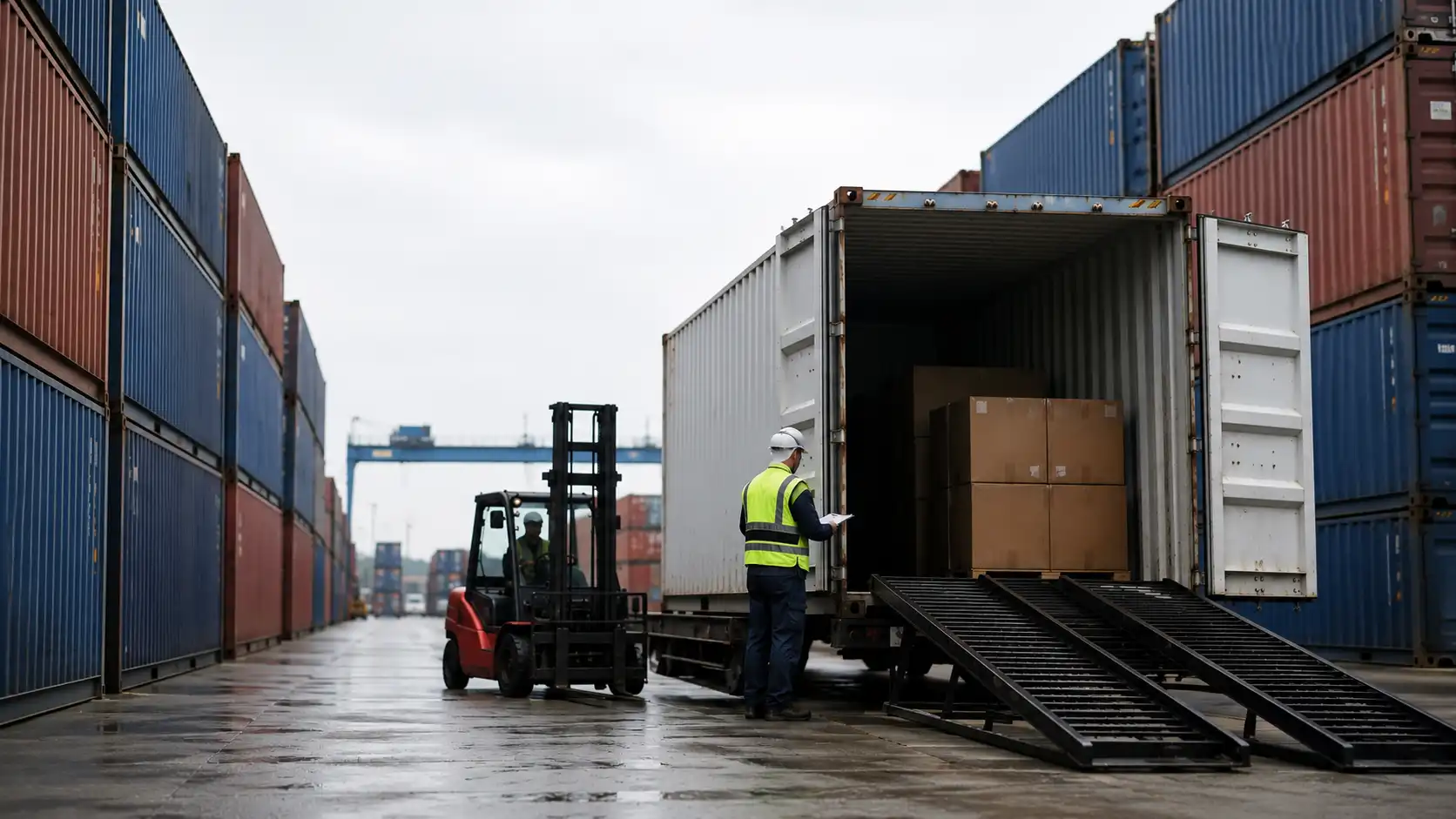
The call always comes the same way: “the goods are held.”
And that sentence, on its own, tells you nothing useful. Held can mean six different things, with different deadlines, different costs and different ways out. Acting before knowing which one you’re in is the most common way a two-day problem becomes a two-month one.
This article is the map: how to identify the case, what runs in parallel meanwhile, and what to do in the first hours.
First: held is not seized
Worth separating from the start, because people use the same word for both.
- Held is a pause in clearance. The goods are in the bonded facility, the authority is reviewing or a document is missing, and the filing is still alive.
- Seized is something else: the authority found an irregularity, took the goods and started a formal procedure with legal deadlines running.
Most calls are the first. And most of the first resolve without a lawyer, if you move fast.
The six causes, and how to tell them apart
1. You drew a customs inspection
The automated selection mechanism flagged red and the authority will physically inspect the goods. It isn’t an accusation: it’s the system working as designed.
How you recognize it: there’s no request and no notified irregularity — the entry is simply in inspection.
What to do: wait, with the file ready in case they ask. See the red and green lane.
2. A non-tariff regulation is missing
The most frequent case of all, and the most avoidable. The tariff line required something nobody obtained: a NOM standard, a prior permit or automatic notice, a sector notice like the one for steel and aluminum.
How you recognize it: the entry won’t proceed and the reason points to a missing identifier or document.
What to do: obtain it. And here’s the bad news — these documents almost never come through in a day, and several are requested at origin, not at destination. It’s the cause that generates the most storage charges.
3. You’re missing the sector-specific registry
You’re on the Importer Registry, but your goods are listed in Annex 10 and also require the sectoral registration. The entry won’t proceed.
How you recognize it: the block comes from the registry, not from the goods.
What to do: the sectoral registration takes time, so alternatives have to be evaluated in parallel. See sector-specific importer registry. If the block is the general registry being suspended, that’s a different road: registry suspension.
4. There’s a documentary inconsistency
The data doesn’t match across documents: declared quantity against packing list, supplier against CFDI, description against the physical goods.
How you recognize it: the authority asks for clarification or documents, without alleging an irregularity.
What to do: clarify with documents, and assess whether an amendment is appropriate. The fields where this happens most are always the same ones.
5. There’s a question over the declared value
The authority challenges the customs value: a price well below reference points, omitted dutiable additions, or documentary support that doesn’t hold up what was declared.
How you recognize it: the request asks for value documentation — invoices, proof of payment, contracts.
What to do: hand over the complete value file. If it doesn’t exist, that’s the real problem. See customs value declaration and undervaluation.
6. There’s already a precautionary seizure
The authority found an irregularity the law sanctions with seizure and opened a PAMA. Here legal deadlines are genuinely running and specialized counsel is worth having from day one.
How you recognize it: there’s a formal record, and in it you’re notified of the procedure starting and the term to offer evidence.
What to do: PAMA and precautionary seizure explains the stages and what can be done at each. The clock runs from notification, not from when you find out.
What runs while you’re figuring it out
This is the part that turns a small problem into an expensive one, and it’s independent of the cause.
From the moment the goods touch the bonded facility, the commercial clock doesn’t stop:
- Storage charges at the bonded facility, which usually escalate in day bands.
- Container demurrage, billed by the carrier to whoever is holding it.
- Truck detention, if a unit is waiting.
The details are in demurrage, detention and storage. What matters here: the cost of the standstill often exceeds the cost of the original problem. A cheap document that takes three weeks can cost far more than the document.
That’s why the first useful question isn’t “whose fault was it?” but “how many days until this resolves, and what does each day cost?”
The first hours
An order that works, whatever the cause:
- Get the document, not the summary. The record, the official letter, the request, or the system screen. “They told me it’s held” isn’t enough to decide anything.
- Identify the case using the list above. It’s the fork that determines everything else.
- Find the deadline, if there is one, and who has to meet it. In the cases with formal notification, the deadline is the first thing that matters.
- Calculate the daily cost of the standstill: storage plus demurrage plus detention. That number decides whether to resolve, re-export or abandon.
- Assemble the complete file before replying: invoice, transport, proof of payment, permits, certificate of origin.
- Reply once and properly. Partial answers stretch the process and multiply the days.
What not to do
- Wait to see whether it clears itself. It doesn’t, and the storage charges do run.
- Send loose documents over WhatsApp as they appear. You lose any trace of what was delivered and when.
- Improvise an amendment without understanding the cause: if the problem is substantive, amending can make it worse.
- Assume the customs broker is handling it. They may well be. Confirm it with facts, not assumptions — liability before the authority is still yours.
Almost all of this is prevented before shipping
That sounds like cold comfort if your cargo is already sitting still, but it’s worth recording for next time: the vast majority of holds are decided at a desk, weeks before the port.
Getting the tariff line right determines which regulations apply. Checking them before buying leaves time to obtain them. Having the file assembled from origin means a request gets answered in hours instead of weeks.
In the duty calculator you can see which NOM standards, permits and registry sectors the tariff flags for a given line before closing the purchase. It’s the check that prevents the call.
At TradeWay
When an operation stops, the problem is rarely technical — it’s coordination: three vendors, each with a version, none responsible for the whole. We run the entire chain through one point of contact and one invoice, so the answer comes from one place. If you have cargo held right now, get in touch — the first thing is identifying which of the six cases you’re in.